
Last updated 16 July 2026 by Sammie O, owner of Bud Car Wash in Ras Al Khor Industrial Area 2, Dubai.
Pet hair can work into car upholstery until the seats look clean from a distance but still feel covered up close. Fabric fibres hold onto fur, while static makes loose strands cling to carpets, door panels, and seat seams.
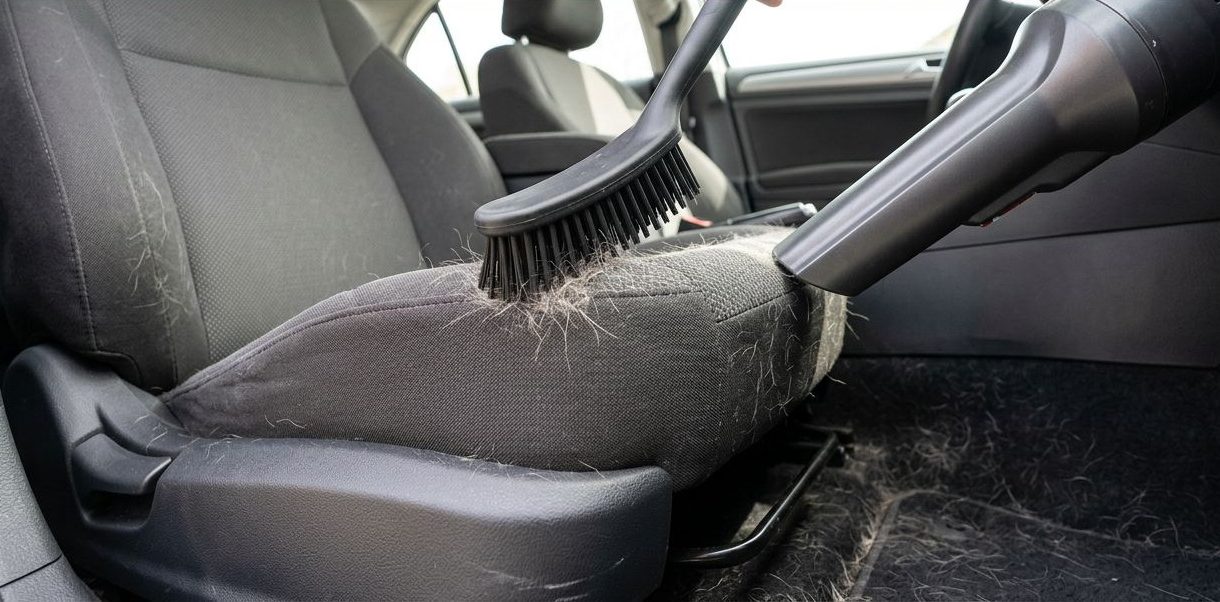
The right tools make the job easier. Start with dry manual removal, collect the loosened hair, and vacuum only after most of the fur is free. These steps help you remove pet hair from car upholstery without soaking the seats or damaging delicate interior surfaces.
Want us to do it instead?
We do interior detailing at our Ras Al Khor bay, 24 hours a day. Fill this in and we reply with a price and a time. The message writes itself, so you only tap send.
Would rather talk? Call +971 55 168 5050. Someone answers 24 hours.
Key Takeaways
- Use a rubber brush, squeegee, or dampened rubber glove to loosen embedded hair.
- Vacuum after manual removal, using narrow attachments around seams and floor mats.
- Keep liquids, sprays, and vacuum nozzles away from electronics and delicate trim.
- Treat leather differently from fabric upholstery.
- Professional detailing may be worthwhile when hair has reached deep seams, vents, or carpets.
Why Pet Hair Sticks to Car Upholstery
Pet hair stays in a vehicle for several reasons. Fabric seats and carpets have thousands of small fibres that catch fur as your dog or cat moves. Friction pushes the hair deeper into the weave, especially where your pet sits or turns around.
Static electricity also makes hair cling to upholstery. Dry weather, synthetic fabrics, and regular movement can create enough static for loose strands to stick to seats and door panels. A household vacuum may collect surface debris but leave hair behind when the strands are wrapped around the fibres.
Hair often collects in areas that are easy to miss. Check the seat belt buckles, the gap between the seat and centre console, the edges of floor mats, and the folds beneath the front seats. Door pockets and cargo-area carpeting can also hold a surprising amount of fur.
Avoid beginning with water or upholstery cleaner. Moisture can press hair further into fabric and create a sticky layer that takes longer to remove. Dry tools give you better control and make the final vacuuming more effective.
Loose hair should be gathered before you clean stains or apply any upholstery product. Otherwise, the fur can spread across a larger area.
Gather the Right Tools Before Cleaning
A few simple tools are enough for most car interiors. Choose products that match the upholstery and follow the vehicle manufacturer’s care instructions.
You may need:
- A rubber pet-hair brush or rubber squeegee
- A clean rubber glove
- A lint roller for small areas
- A vacuum with a crevice tool and soft brush attachment
- Microfiber cloths
- A fabric-safe anti-static product, if needed
- An approved leather cleaner and conditioner for leather seats
- A soft interior brush for seams and textured surfaces
Rubber works well because it creates friction against fabric and gathers hair into visible lines or clumps. A rubber squeegee can cover a seat quickly, while a smaller pet-hair brush is useful around stitching and corners.
Use a lint roller for finishing work rather than the entire vehicle. Adhesive sheets can fill quickly on heavily covered seats, and repeated pressure may leave small fibres behind. A clean microfiber cloth can pick up the last few strands from hard trim.
Open the doors and park in a shaded, well-ventilated area. Direct sunlight can heat leather, plastic, and cleaning products. Remove floor mats before cleaning so you can work on them separately.
Step-by-Step: Remove Pet Hair From Fabric Seats
Work on one section at a time. Cleaning an entire interior at once can scatter the hair before you have a chance to collect it.
1. Remove loose items and shake out the mats
Take out pet blankets, covers, toys, and floor mats. Shake the mats outdoors, then place them on a clean surface. Don’t shake them beside the open car, or wind can carry the hair back inside.
Inspect the seats, carpets, and cargo area under good light. A portable work light can help you see pale hair on dark upholstery. Mark the areas with the heaviest buildup so you can give them extra attention.
2. Loosen the embedded hair with rubber
Run a dry rubber brush or squeegee across the fabric using short strokes. Work in one direction first, then change direction to lift hair caught across the weave.
Use moderate pressure. Pressing too hard can flatten upholstery fibres or push fur deeper into the seat. Move slowly around stitching, piping, and seat controls.
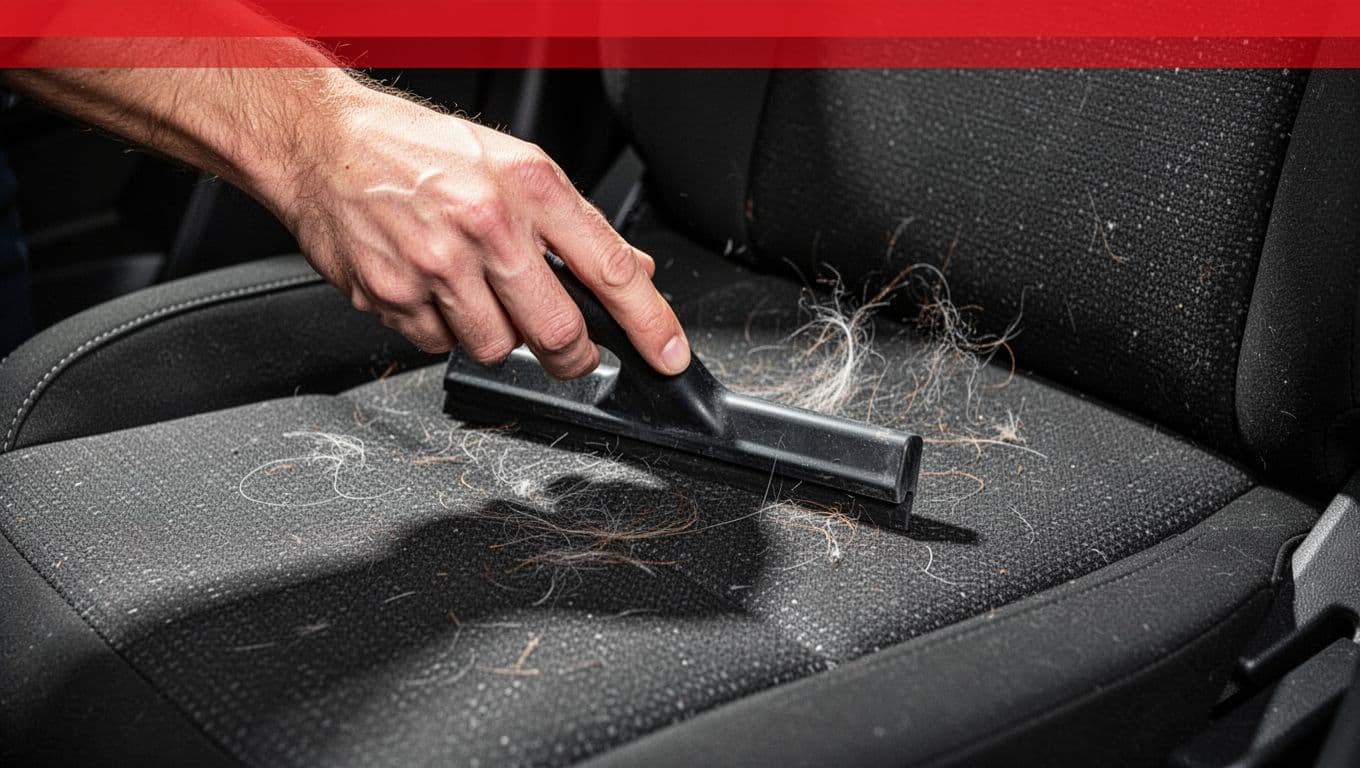
A clean rubber glove also works for smaller sections. Lightly dampen the glove if dry rubber isn’t gathering the hair. The glove should be slightly moist, not wet. Wipe the loosened fur into a pile and remove it by hand.
Don’t use a metal scraper, stiff wire brush, or sharp household tool. These can pull threads, scratch plastic, and damage the upholstery surface.
3. Collect the hair before vacuuming
Pick up the gathered clumps with your gloved hand or a lint roller. Place them in a rubbish bag instead of brushing them onto the floor. Hair on the floor can quickly settle back into the carpet.
For seams and narrow gaps, use a soft detailing brush. Brush outward toward an open area, then collect the hair. Avoid forcing a brush into a seat belt mechanism, buckle, air vent, or electrical switch.
4. Use an anti-static product only when needed
If static continues to hold the hair, choose a product labelled safe for automotive fabric. Read the instructions first and test it on a hidden section. Colour changes, water marks, or stiffening can occur when an unsuitable product is used.
Never spray directly onto a seat control, speaker, air vent, screen, charging port, or dashboard opening. Spray a small amount onto a microfiber cloth, if the label permits, and wipe the fabric lightly. Allow the area to dry before vacuuming.
Keep static-reducing products away from leather unless the product specifically approves leather use. Many fabric sprays are not suitable for leather, vinyl, suede-like materials, or coated trim.
Vacuum the Seats, Carpets, and Tight Gaps
Vacuuming works best after the rubber tool has lifted most of the hair. Use a strong household, shop, or car vacuum with a clean filter. A full filter reduces suction and can leave fur behind.
Begin with the seats. Use a soft brush attachment on broad surfaces, keeping the nozzle moving rather than holding it in one place. Follow the upholstery grain where possible, then vacuum across the grain to collect remaining strands.
Use the crevice tool around seat edges, stitching, and the space beside the centre console. Keep the nozzle slightly above fragile stitching if the fabric is loose or worn. Don’t drag the attachment across exposed wiring or push it underneath powered seat mechanisms.
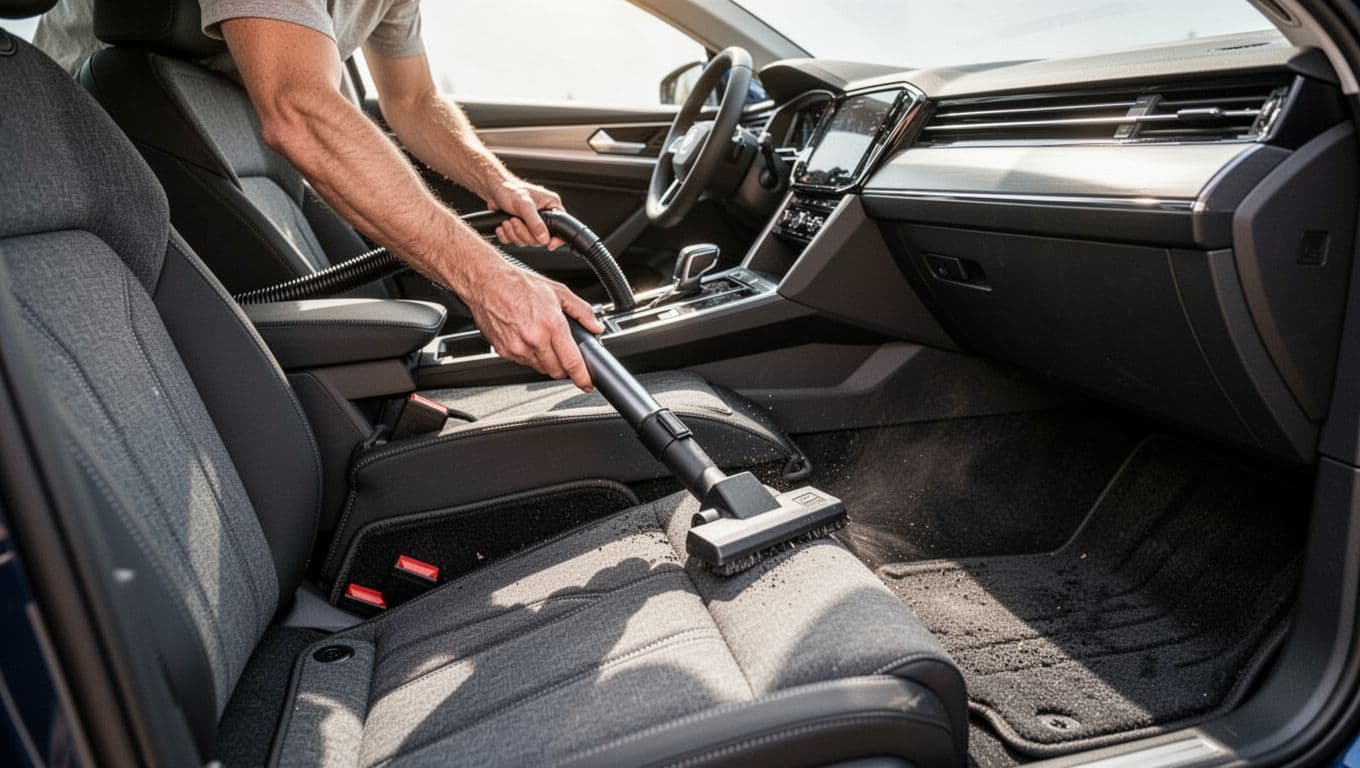
Clean the carpet after the seats. Vacuum in overlapping passes, then change direction and repeat. Pay close attention to the area where your pet’s paws rest, the rear footwells, and the cargo floor.
Vacuum floor mats outside the vehicle. Hold each mat securely and work along the edges, underside, and grooves. Shake or tap the mat only where loose debris won’t return to the car.
Take extra care near vehicle electronics. Keep the vacuum away from dashboard buttons, instrument screens, USB ports, speakers, air vents, and exposed connectors. A narrow nozzle can catch a loose switch cover or scratch glossy trim if it is forced into a gap.
A soft detailing brush can loosen hair around electronic controls while the vacuum nozzle collects it nearby. Don’t vacuum directly over small buttons with strong suction.
Cleaning Leather and Delicate Interior Trim Safely
Leather seats need a different method. Rubber tools can still collect loose hair, but heavy pressure can mark soft or perforated leather. Start with a dry microfiber cloth or a soft interior brush.
Use the brush to move hair out of perforations, seams, and seat folds. Vacuum the loosened hair with a soft brush attachment. Keep the nozzle away from the leather surface if the vacuum has strong suction, especially on older seats with cracking or worn finish.
If a leather cleaner is needed, apply it to a microfiber cloth rather than spraying the seat directly. Test the product in a hidden area first. Clean a small section at a time and wipe away residue with a separate cloth.
Don’t saturate perforated leather. Liquid can enter the holes and reach the seat cushion, heating elements, or electrical components. Keep damp cloths away from seat controls and avoid liquid near the seat belt buckle.
Suede-like materials, Alcantara, vinyl, and coated plastics also need product-specific care. A method that works on woven fabric may leave marks on another surface. Check the owner’s manual or the material manufacturer’s instructions before using water, brushes, or static-reducing products.
Never treat delicate trim as ordinary upholstery. A small amount of controlled cleaning is safer than a wet surface that dries with marks or reaches hidden electronics.
Prevent Pet Hair From Returning
Removing pet hair is easier when fewer strands reach the seats. Use a washable pet car cover on the seat or cargo area. Choose a cover with secure straps so it doesn’t slide into pedals, door openings, or seat belt paths.
Brush your pet before travel when possible. Regular grooming reduces loose fur, especially during seasonal shedding. A short stop to remove visible hair from the cover is easier than waiting for it to become embedded.
Keep a small cleaning kit in the vehicle. A rubber glove, compact lint roller, microfiber cloth, and portable vacuum can handle fresh hair before it settles. Store the tools in a sealed bag so collected fur doesn’t spread through the cabin.
Clean the cover outside the vehicle and follow its washing instructions. Don’t place a fur-covered cover directly into a washing machine without removing loose hair first. Large amounts can collect inside the machine filter or drain.
For frequent pet travel, schedule interior cleaning as part of normal vehicle care. In Dubai’s warm, dusty conditions, fur can mix with fine sand and become harder to lift from carpet fibres. Regular vacuuming and prompt spot cleaning keep the buildup manageable.
When Professional Detailing Is Worthwhile
Home cleaning can handle regular shedding, but severe buildup may need professional equipment. Consider professional interior detailing when hair is packed into seat seams, trapped beneath fixed seats, or spread through the carpet and cargo lining.
A detailing team can use stronger extraction equipment, specialised brushes, and controlled cleaning products. This is useful when pet hair is mixed with mud, odour, food residue, or stains. Professional care is also safer when the interior includes perforated leather, suede-like trim, powered seats, or sensitive electronic controls.
Choose a service that explains its process and checks the vehicle’s materials before cleaning. A careful detailer should protect screens, switches, speakers, seat controls, and other sensitive areas. The service should also include proper drying, not excessive moisture left inside the cabin.
Bud Car Wash provides deep interior detailing for vehicle owners who want a thorough, refreshed finish. Professional cleaning is a practical choice when manual tools and regular vacuuming no longer produce a clean result.
Conclusion
Pet hair doesn’t need to become a permanent part of your car’s interior. Loosen embedded fur with rubber tools, collect it before vacuuming, and use narrow attachments carefully around seams and controls.
Treat fabric, leather, and delicate trim according to their material. Keep liquids away from electronics, and choose professional interior detailing when hair has spread into difficult areas. With the right process, a heavily fur-covered cabin can return to a clean, comfortable finish.
Get a price on interior detailing
Shop #7, 44, 22nd Street, Ras Al Khor Industrial Area 2, open 24 hours. Tell us the car and we reply with a price and a time.
Would rather talk? Call +971 55 168 5050. Someone answers 24 hours.
See us first on Google
Google lets you choose the sites you want to see more of. Add Bud Car Wash as a preferred source and our car care guides show up more often in Top Stories and in Google’s AI answers.
Opens Google in a new tab. You can remove us again at any time.

Sammie O is the owner of Bud Car Wash, a 24 hour hand car wash and detailing shop at Shop #7, 44, 22nd Street, Ras Al Khor Industrial Area 2, Dubai. He writes the car care guides on this site based on work done in his own bay.
View All Articles