
A new car can lose its fresh showroom appearance quickly in Dubai’s heat, dust, and busy traffic. New car detailing helps protect that first impression, but it isn’t the same as a routine wash or a ceramic coating.
The right care plan starts with a gentle first inspection, continues with safe washing, and adds protection only when your vehicle needs it. Start with the basics before choosing products or booking a service.
Key Takeaways
- A new car still needs a careful inspection before its first full detail.
- Routine washing removes surface dirt, while detailing cleans areas a normal wash misses.
- Screens, trim, leather, and fabric need separate cleaning methods.
- Wax, sealants, ceramic coatings, and paint protection film offer different levels of care.
- Professional detailing is useful when the car has dealer swirls, stains, contamination, or a neglected interior.
Start With a Careful First Inspection
Many new owners book detailing as soon as they collect the vehicle. That can be a good decision, especially if the car has spent time outside or received rushed dealer preparation. However, the first step should be an inspection, not polishing.
Walk around the car in bright shade or soft indoor light. Look for water spots, fingerprints, adhesive residue, transport film, bird droppings, and light circular marks in the paint. Check the door edges, fuel flap, wheel faces, glass, and areas beneath the boot lid. These spots are easy to miss during a quick handover.
The interior deserves the same attention. Check the seats, dashboard, carpets, door panels, centre console, and touchscreens. Remove protective plastic carefully, and keep any paperwork or accessories away from wet cleaning products.
Use this simple handover checklist:
- Photograph existing marks before the first service.
- Confirm which surfaces are leather, fabric, vinyl, or synthetic trim.
- Ask whether the dealer applied wax, dressing, or another product.
- Keep the owner’s manual available for cleaning instructions.
- Tell the detailer about sensitive screens, special trim, or delicate finishes.
Factory paint is normally ready for regular care when the vehicle reaches you. You don’t need to wait months before applying a suitable wax or sealant. The product instructions and the vehicle manufacturer’s guidance should always take priority.
A first detail may include a careful wash, wheel cleaning, interior preparation, and light paint decontamination. It shouldn’t automatically include machine polishing. New paint doesn’t need aggressive correction unless visible defects are present.
For practical ideas about wash order, drying, and basic tools, review this beginner detailing process shared by the AutoDetailing community.

Build a Safe Exterior Washing Routine
A routine wash removes loose dust, road film, and fresh grime. It keeps contamination from sitting on the paint, but it doesn’t provide the same depth as detailing.
In Dubai, a weekly wash may suit a car that is parked outside or driven daily. A covered vehicle used less often may need cleaning every two weeks. Bird droppings, tree sap, and oily marks should be removed as soon as possible because heat can make them harder to clean.
Wash the vehicle when the panels are cool and out of direct sunlight. Early morning, late afternoon, or a shaded wash bay is safer than a hot driveway. Strong sunlight dries soap and water before you can rinse them away, leaving marks behind.
A safe home wash usually needs:
- A pH-neutral car shampoo, not dish soap or household detergent.
- Separate buckets or a clean rinse system for the body and wheels.
- A soft wash mitt for painted panels.
- Dedicated wheel brushes and towels.
- Several clean, plush microfiber drying towels.
- A gentle hose or pressure washer used at a sensible distance.
Rinse loose dirt from the roof downward before touching the paint. Wash one panel at a time, starting at the top and moving toward the lower sections. Rinse the mitt often. Wheels and tyres should be cleaned with separate tools because brake dust can scratch painted surfaces.
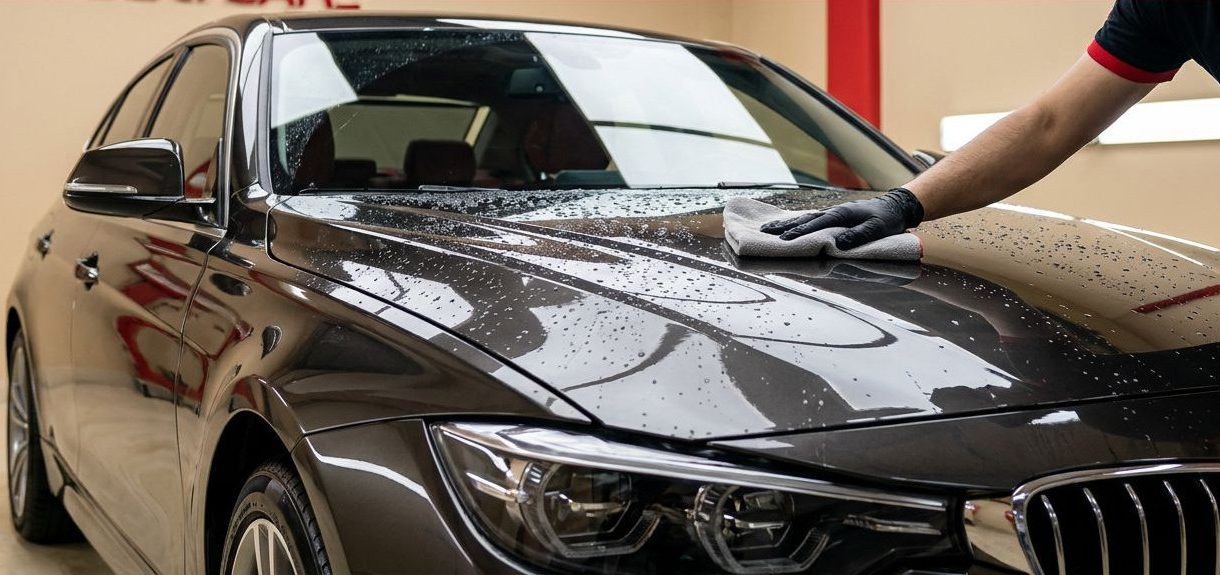
Dry the vehicle with a clean microfiber towel or a low-pressure air blower. Don’t drag a dirty towel across the paint, and don’t let hard-water droplets dry naturally. If you drop a towel or mitt on the ground, replace it or wash it before using it again.
Routine washing should not include a harsh scrub, stiff household brush, abrasive sponge, or strong solvent. These shortcuts can mark clear coat, stain trim, and dull glossy surfaces.
A clean towel is part of the cleaning process. A dirty towel can move grit across the paint instead of removing it.
Detail the Interior Without Causing Damage
Interior detailing is a deeper service than vacuuming and wiping the dashboard. It reaches seat seams, air vents, cup holders, door pockets, carpet edges, and areas around the pedals. New cars often have clean interiors, but dust from transport and dealer preparation can still collect in overlooked areas.
Begin with a thorough vacuum using a soft brush attachment. Work slowly around stitching, buttons, vents, and seat rails. Use a small detailing brush to loosen dry dust, then vacuum it away instead of pushing it into gaps.
Clean hard surfaces with a lightly damp microfiber cloth and a product approved for automotive interiors. Don’t spray liquid directly onto the dashboard, instrument panel, buttons, or centre console. Spray the cloth, then wipe the surface.
Touchscreens need extra care. Use a dry or slightly damp, clean microfiber cloth unless the vehicle manual gives different instructions. Avoid household glass cleaner, paper towels, rough cloths, and strong alcohol-based products. These can affect coatings or leave scratches.
Leather and synthetic leather also need the correct product. Wipe away dust first, then use a small amount of approved cleaner. Avoid soaking seams or applying oily dressings that leave a slippery surface. Fabric seats and carpets should be cleaned with controlled moisture, followed by proper drying.
Pay attention to high-touch areas:
- Steering wheel and gear selector.
- Door handles and window switches.
- Seat belt surfaces and buckles.
- Cup holders and storage compartments.
- Floor mats and the area beneath them.
A professional interior detail can refresh the cabin without making it look greasy or over-treated. Ask the service provider which products are used on screens, leather, plastic, and fabric. For more ideas about starter equipment, see this discussion about essential detailing supplies.
Choose Paint Protection That Fits Your Car
Paint protection is separate from washing and detailing. Washing removes dirt. Detailing improves the condition and appearance of the vehicle. Protection adds a layer that helps the surface handle contamination and cleaning.
Wax is a simple option for owners who want added gloss and short-term water beading. It usually needs regular reapplication, particularly when the vehicle faces strong sun and frequent washing.
A paint sealant can last longer than traditional wax, depending on the product, preparation, use, and maintenance. It offers a clean finish with less frequent application. Neither wax nor sealant makes the paint scratch-proof.
Ceramic coating is a professional or carefully applied liquid coating that bonds to prepared paint. It can make washing easier and provide longer-lasting resistance to some contamination. It still needs proper washing, and it won’t prevent stone chips, deep scratches, or careless washing marks.
Paint protection film is different. It is a clear physical film applied to selected painted panels, commonly the front bumper, bonnet, mirrors, and door edges. It is designed to take more direct impact than a liquid coating, but installation quality matters.
| Protection option | Best suited to | Important consideration |
|---|---|---|
| Wax | Owners who want gloss and simple upkeep | Needs regular renewal |
| Paint sealant | Owners seeking longer-lasting surface protection | Requires clean, prepared paint |
| Ceramic coating | Owners who want easier maintenance and durable protection | Doesn’t prevent chips or all scratches |
| Paint protection film | High-impact areas and high-mileage vehicles | Costs more and needs skilled installation |
A new car doesn’t need every protection option. Consider where you park, how often you drive, how long you plan to keep the car, and how much maintenance you prefer. A clean wash routine with a suitable sealant may be enough for one owner. Another may prefer film on the front end and a coating on the remaining paint.
Before choosing a service, ask whether the price includes paint preparation, decontamination, curing time, aftercare instructions, and any warranty terms. A coating applied over bonded dirt or dealer residue won’t deliver the finish you expect.
When Professional New Car Detailing Makes Sense
Professional detailing is useful when you want a careful starting point or don’t have a safe place to wash the car. It is also practical when the vehicle has paint marks, water spots, interior stains, or residue that normal cleaning doesn’t remove.
A reputable provider should inspect the vehicle before recommending work. The service should match the car’s condition, not a fixed package that adds unnecessary polishing or strong chemicals.
Ask these questions before booking:
- What does the service include?
- Will the paint be polished, and why?
- Are wheels and tyres cleaned with separate tools?
- Which products are used on screens and interior trim?
- How should the car be washed after protection is applied?
- Are eco-friendly products and controlled water use part of the process?
For Dubai owners, a local service such as Bud Car Wash can be suitable when you want exterior washing, deep interior detailing, or wax-and-polish care in one visit. Share your concerns clearly, especially if the car has delicate upholstery, gloss-black trim, or a recently applied coating.
Be careful with any provider that promises permanent protection, a scratch-proof finish, or instant correction without inspecting the paint. Good detailing depends on preparation, suitable products, clean tools, and careful workmanship.
You can also compare the steps beginners commonly discuss in this auto detailing essentials guide before building a home routine.
Conclusion
Your first car deserves more than an occasional rinse. A gentle wash routine, careful interior cleaning, and suitable paint protection will help preserve its clean appearance without exposing new finishes to unnecessary risk.
Start with an inspection, choose products for each surface, and avoid aggressive correction unless the paint needs it. With consistent new car detailing and dependable professional care when required, the showroom finish can stay fresh for much longer.

Sammie O is the owner of Bud Car Wash, a 24 hour hand car wash and detailing shop at Shop #7, 44, 22nd Street, Ras Al Khor Industrial Area 2, Dubai. He writes the car care guides on this site based on work done in his own bay.
View All Articles