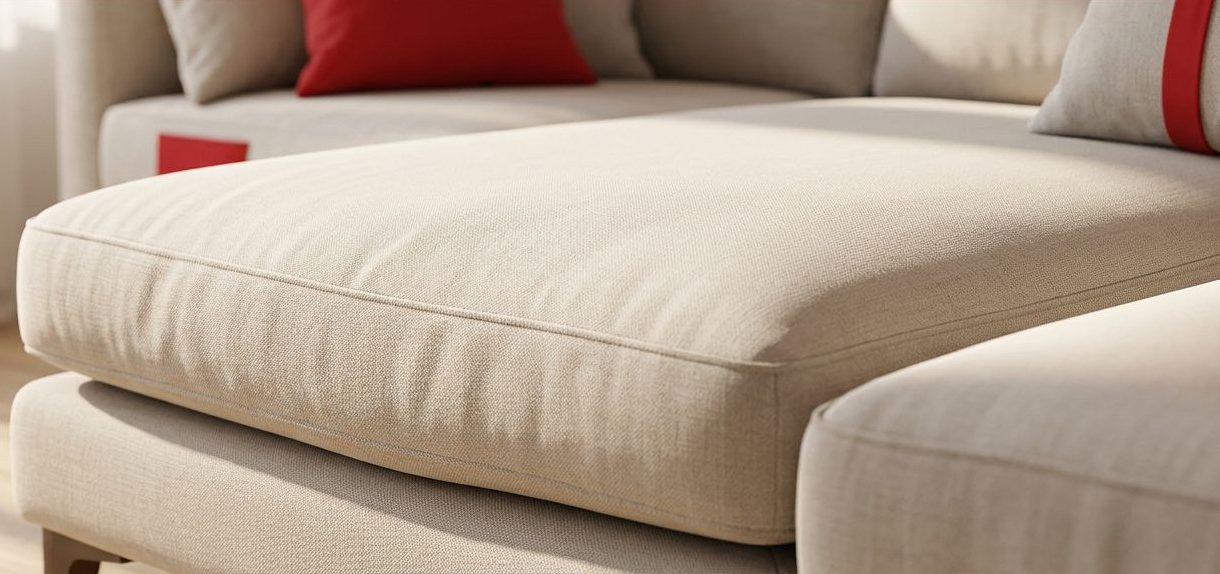

Water rings usually appear when one part of a cushion gets wetter than the rest. The fix isn’t more scrubbing. It is controlled moisture, even coverage, and quick drying.
If you want to clean fabric upholstery at home, start with the manufacturer’s care label. The code tells you whether water, solvent, vacuuming, or professional cleaning is suitable for the fabric.
A careful low-moisture method can refresh a sofa, chair, or upholstered bench without leaving a pale outline behind. Begin with the label, then control the amount of liquid and the drying time.
Check the Care Label Before Cleaning
Before applying any cleaner, look under the cushion, along the platform, or beneath the furniture frame for the manufacturer’s tag. Read the cleaning code, fiber details, and care warnings. If the tag is missing, treat the fabric as water-sensitive until a professional confirms the correct method.
Read the upholstery cleaning code
Care labels commonly use four codes. An upholstery cleaning code guide can help you check the symbols before you begin.
- W allows a water-based upholstery cleaner when used sparingly.
- S requires a solvent-based upholstery cleaner, not water.
- WS or W-S permits water-based or solvent-based products, subject to testing.
- X means vacuuming or light brushing only.
An X-coded fabric shouldn’t be wet-cleaned at home. Clad Home’s fabric-care guidance also limits X fabrics to vacuuming or light brushing. For S or WS fabrics, use only a product labelled for upholstery and follow its directions.
Test a hidden area first
Vacuum a hidden area, then apply a small amount of the planned product to a white cloth. Blot the test spot and let it dry fully. Check for color transfer, bleeding, shrinkage, stiffness, or a changed nap before cleaning the visible surface.
If the fabric changes in any way, stop. A small test mark is easier to manage than damage across an entire sofa cushion.
Gather Materials and Protect the Area
Keep the setup simple and use clean tools:
- A vacuum with an upholstery attachment and crevice tool
- Several white microfiber cloths
- A bowl of lukewarm water, only when the label permits water
- A pH-neutral upholstery cleaner that matches the fabric code
- A soft upholstery brush, if the care label allows brushing
- A fan or open window to improve airflow
Protect the floor with a towel or waterproof sheet. Wear gloves when using cleaning products, ventilate the room, and keep liquid away from recliner controls or electrical parts. Never mix cleaning solutions. Avoid bleach, laundry detergent, and hot steam unless the manufacturer’s instructions approve them.
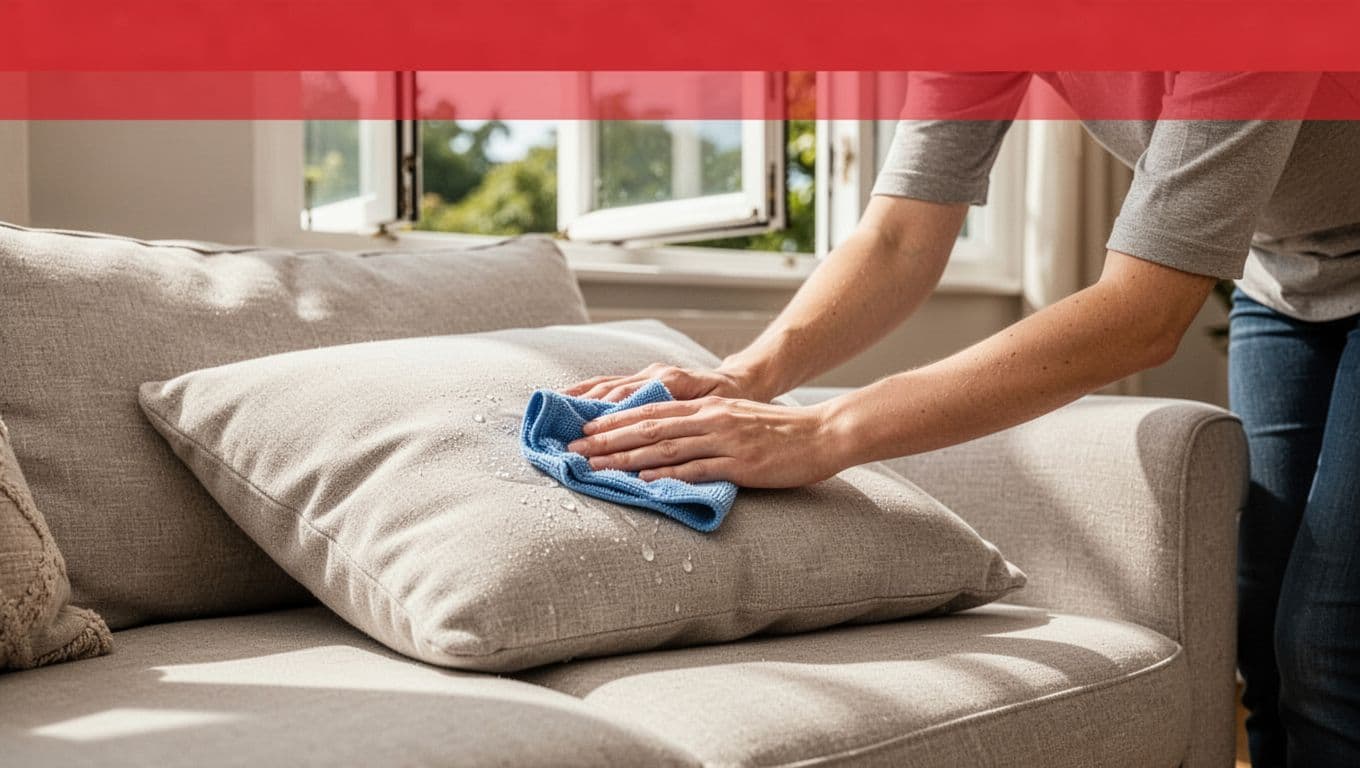
How to clean fabric upholstery without leaving water rings
Once the fabric passes its test, use this low-moisture process:
- Vacuum the entire cushion, including seams, creases, and the underside if accessible.
- Mix the cleaner according to its label. Don’t make the solution stronger than directed.
- Dampen a white microfiber cloth and wring it out well. The cloth should be damp, not dripping.
- Wipe or blot gently with light pressure. Avoid scrubbing, which can spread soil and damage the fibers.
- If the product requires rinsing, use a separate barely damp cloth to lift residue.
- Dry the upholstery immediately with airflow before replacing cushions or covers.
Clean a complete section evenly
A water ring often marks the boundary between a wet area and a dry area. For a cushion or arm with overall soil, clean the whole fabric panel, seam to seam, rather than scrubbing one small patch. Use the same light pressure and moisture level across the section.
If only a small spill needs attention, feather the edges with a nearly dry cloth and stop before the fabric becomes saturated. This approach helps you clean fabric upholstery without creating a new outline around the treated spot.
A ring is often the edge of uneven moisture, not a sign that the whole cushion needs more cleaner.
Dry quickly with airflow
Place loose cushions upright if possible and open windows or doors. Run a fan across the surface, not directly against one wet spot. Keep people and pets off the fabric until it is fully dry.
Avoid hairdryers, direct heaters, and strong sunlight, which can affect color or texture. Check seams and corners because they hold moisture longer than flat areas.
Troubleshooting Water Rings and Fabric Damage
Even careful cleaning can leave a mark when the fabric is absorbent or the cushion has a dense filling. Use these steps before repeating the process.
If a water ring appears after drying
Don’t add more cleaner immediately. Let the surface dry completely, then vacuum lightly. For W or WS fabric, test a barely damp white cloth with distilled water in a hidden area.
If it passes, lightly dampen the full cushion face or panel and dry it with airflow. This can soften the visible moisture boundary. If the ring remains, or the color changes, stop and contact an upholstery professional. Repeated wetting can make the mark larger.
If the fabric stays damp
A cushion that stays damp for hours needs more airflow, not more solution. Remove loose cushions, stand them on edge, and run a fan nearby. Don’t seal the furniture under covers until it is fully dry.
A musty smell, sticky finish, or spreading discoloration can indicate excess moisture or cleaning residue. If dampness continues, professional extraction is safer than another home treatment.
For delicate or water-sensitive fabrics
Treat velvet, silk, vintage upholstery, and viscose as delicate unless the manufacturer’s label gives clear cleaning instructions. Water can distort some piles, shrink natural fibers, or cause dye bleed.
X-coded furniture should receive vacuuming or light brushing only. For S fabrics, use the labelled solvent and follow its ventilation guidance. If the fabric has loose seams, deep stains, smoke odor, or a high replacement cost, professional cleaning is the safer choice.
Conclusion
The safest way to clean fabric upholstery without water rings is to follow the care label, use minimal moisture, clean evenly, and dry quickly. A damp cloth is usually better than a soaked cushion, especially when you’re working with an unfamiliar fabric.
Take time to test the cleaner and keep airflow moving during the entire drying stage. Careful preparation protects the fabric, improves the finish, and helps your upholstered furniture stay fresh for longer.

Sammie O is the owner of Bud Car Wash, a 24 hour hand car wash and detailing shop at Shop #7, 44, 22nd Street, Ras Al Khor Industrial Area 2, Dubai. He writes the car care guides on this site based on work done in his own bay.
View All Articles