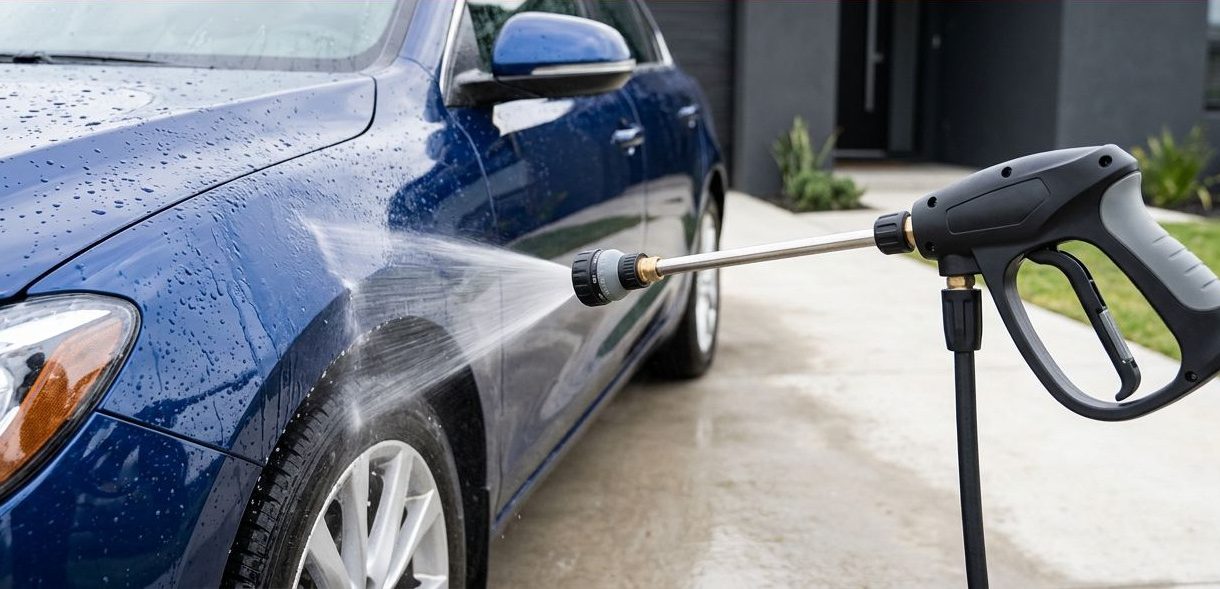

Dirty paint often needs less force than you think. The right car wash gun can loosen road film, rinse away loose grit, and make routine vehicle care faster without turning every wash into a struggle.
A good setup still depends on the nozzle, water pressure, shampoo, and technique. Too much pressure can damage paint, trim, seals, or electrical components. The best results come from controlled cleaning, not the strongest spray available.
What a Car Wash Gun Actually Does
A car wash gun is the trigger handle and spray attachment used to direct water or cleaning solution onto a vehicle. It may connect to a pressure washer hose, a garden hose, or a separate foam applicator, depending on the model.
The spray pattern is one of its most important features. A wide fan spreads water across the panel, while a narrow jet concentrates force into a smaller area. Wide, adjustable spray patterns are usually more suitable for exterior car cleaning because they cover the surface without putting excessive pressure on one point.
Some products sold online as car wash guns are basic hose nozzles. Others are pressure washer guns with interchangeable lances, nozzles, and soap bottles. Check the connection type, pressure rating, and included fittings before buying. A gun that doesn’t match your equipment may leak, fit poorly, or become unsafe during use.
Foam Gun vs. Foam Cannon
A foam gun and a foam cannon are related, but they aren’t the same tool.
A foam gun usually connects to a garden hose or a lower-pressure water source. It mixes shampoo, water, and air to create light foam. This option is practical for quick washes when you don’t own a pressure washer.
A foam cannon is designed for a pressure washer. It uses higher pressure and a specialized injector to create thicker foam across the vehicle. The foam helps hold shampoo on the surface for longer, giving it time to soften loose dirt before the contact wash.
Product names can overlap, so inspect the manufacturer’s connection and operating requirements. Don’t assume a bottle labelled “foam gun” will work with a pressure washer, or that a foam cannon will work with a garden hose.
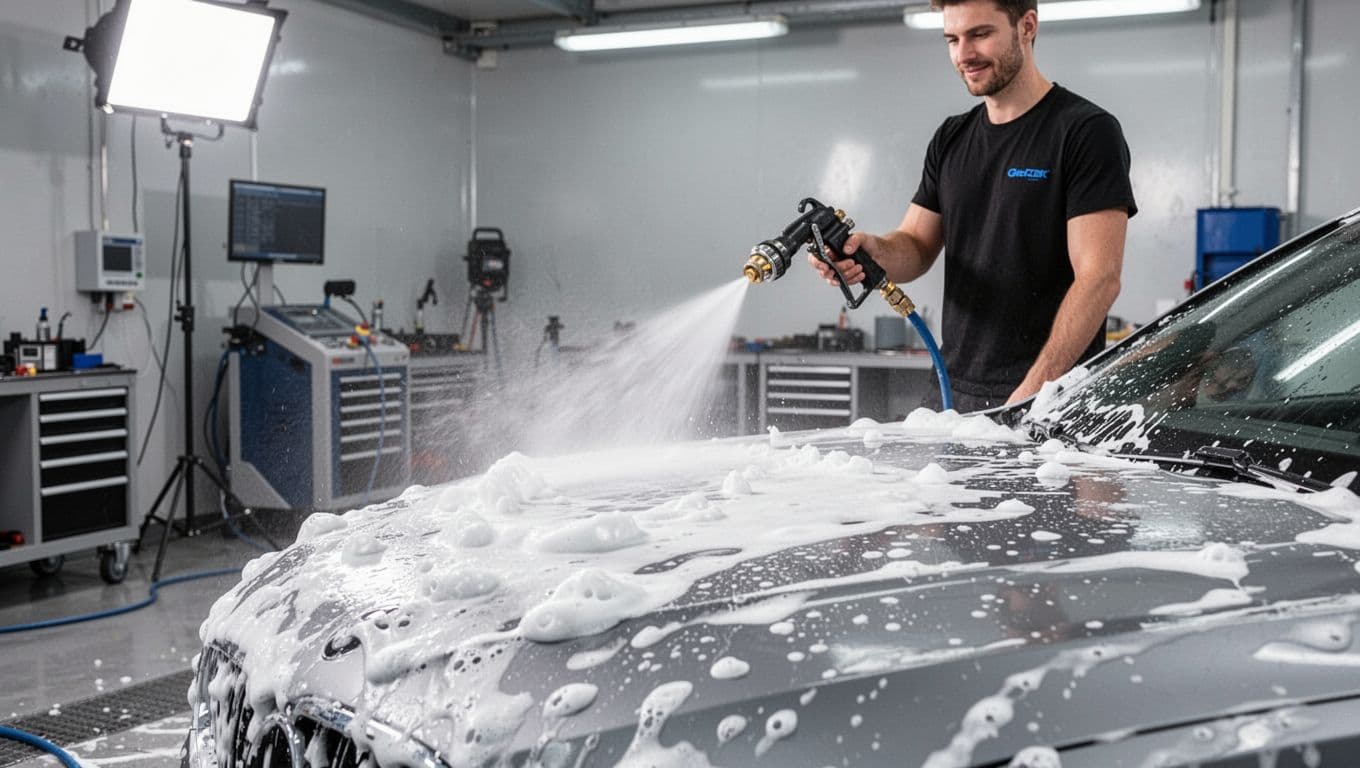
Foam is a pre-wash step, not a replacement for safe hand washing. A practical foam cannon discussion shows how detailers use foam to loosen contamination before touching the paint.
How to Choose the Right Car Wash Gun
The right car wash gun should match your water source and your cleaning routine. A small hose sprayer may be enough for weekly rinsing. A pressure washer gun gives you better reach and more control over larger vehicles, but it also requires more care.
Consider these features before making a purchase:
| Feature | What to check | Why it matters |
|---|---|---|
| Connection | Garden hose, pressure washer, or quick-connect fitting | Prevents leaks and compatibility problems |
| Spray control | Adjustable fan pattern or interchangeable nozzle | Helps match pressure to the vehicle surface |
| Pressure rating | Maximum pressure listed by the manufacturer | Protects the attachment and the user |
| Bottle design | Chemical-resistant bottle with a secure cap | Makes soap application easier and cleaner |
| Trigger and grip | Comfortable handle with a reliable lock | Reduces hand fatigue during longer washes |
| Materials | Durable plastic, brass, or stainless-steel parts | Supports regular use and better water resistance |
The pressure rating should meet your machine’s output. Never exceed the lower rating between the pressure washer, hose, gun, and nozzle. Follow the pressure washer manual when you aren’t sure about compatibility.
An adjustable fan nozzle is more useful than a permanently narrow tip. It lets you rinse wheels, tyres, glass, and paint with different spray patterns. Avoid a 0-degree nozzle on vehicle paint. Its concentrated stream can mark soft surfaces, damage badges, or force water behind trim.
The bottle should seal properly and resist the shampoo you plan to use. A pH-neutral car shampoo is the safest starting point for regular washing. Household dish detergent can remove protective products and may leave the finish feeling dry.
Foam thickness shouldn’t be the only buying factor. Thick foam looks impressive, but cleaning performance also depends on water quality, shampoo dilution, dwell time, and how much dirt is on the vehicle. A first-time foam cannon forum discussion highlights the practical importance of setup and washing technique.
How to Use a Car Wash Gun Safely
Begin with a vehicle that is parked in shade. Hot panels dry shampoo too quickly and can leave water spots, especially in Dubai’s warm climate. The bodywork should be cool to the touch before you start.
A safe exterior wash usually follows this order:
- Remove loose dirt first. Use clean water and a wide spray pattern to rinse the vehicle from the top downward. Keep the nozzle moving rather than holding it in one place.
- Apply the shampoo solution. Use the correct dilution for your foam gun or foam cannon. Cover the vehicle evenly, including lower panels where road film collects.
- Allow short dwell time. Let the foam sit for a few minutes, but don’t allow it to dry. Drying soap can leave residue and water marks.
- Rinse the foam away. Work from the roof toward the wheels. Keep a safe distance from the paint, badges, sensors, window seals, and rubber trim.
- Use a clean wash mitt. Foam loosens contamination, but it doesn’t remove every bonded particle. Wash one panel at a time with a lubricated mitt, rinsing the mitt regularly.
- Rinse again. Remove all shampoo from panel gaps, mirrors, grilles, door handles, and wheels. Leftover soap can dry into visible spots.
- Dry with clean microfiber towels. Use a soft, absorbent towel and light pressure. A clean air blower can help remove water from mirrors, badges, and trim.
A detailed foam cannon step-by-step guide follows the same basic principle: pre-soak the surface, rinse thoroughly, then complete a careful contact wash.
Don’t wash in circles with a dirty mitt. Small particles caught in the mitt can create fine scratches across the clear coat. Use separate tools for paint, wheels, and tyres. Wheel contamination often contains metallic brake dust that shouldn’t return to the bodywork.
The car wash gun also works well for rinsing wheel arches and removing loose dirt from wheels. Use a lower setting around delicate wheel finishes, painted brake calipers, and tyre valves. Never direct high pressure into wheel bearings or close to damaged tyre sidewalls.
Safety Rules That Protect Paint and People
Pressure washer injuries happen when a narrow stream contacts skin at close range. The water can cut skin, damage eyes, and drive dirt into a wound. Keep the spray pointed at the vehicle and never at another person, animal, or yourself.
A narrow jet can damage paint and trim even when the panel looks strong. Distance and a wide spray pattern provide more control than maximum pressure.
Keep the following safety points in mind:
- Wear closed shoes and eye protection when rinsing wheels or working with high pressure.
- Keep both hands steady on the pressure washer gun when the trigger can create strong kickback.
- Start with the nozzle pointed away from people, glass, and delicate surfaces.
- Never use a damaged hose, leaking fitting, cracked bottle, or loose quick-connect.
- Keep electrical plugs, extension connections, and pressure washer controls dry and off the ground.
- Use an outlet protected by a suitable residual-current device or ground-fault protection, according to local requirements and the equipment manual.
- Switch off and unplug an electric pressure washer before checking a blockage or changing attachments.
- Don’t spray directly into door locks, window channels, charging ports, engine-bay electronics, or open connectors.
- Keep the nozzle several inches away from paint and increase distance if the surface, trim, or coating is in poor condition.
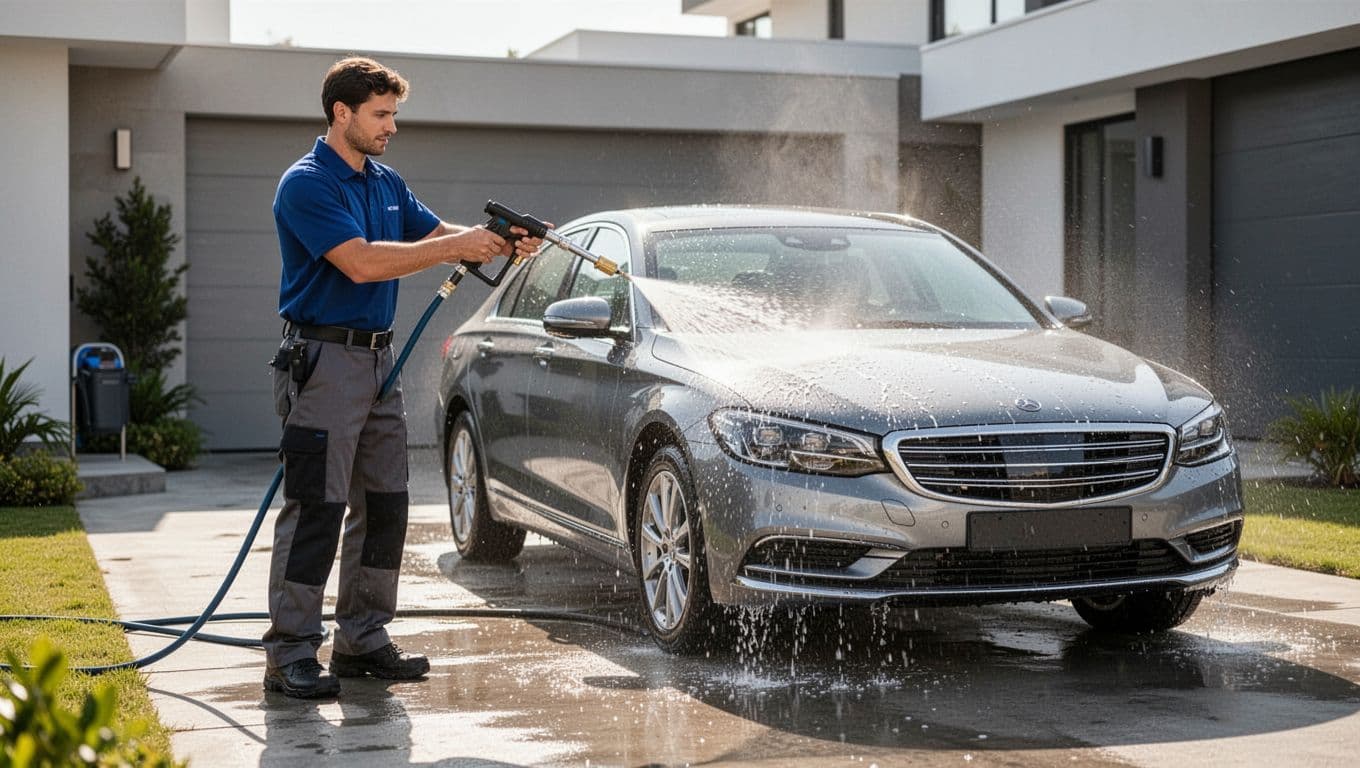
Paint damage isn’t always visible during the wash. A strong stream can lift loose lacquer, worsen a stone chip, or force water beneath a peeling edge. Use gentle pressure around repaired areas and avoid spraying damaged seals directly.
The same care applies to ceramic coatings, wax, and polish. A pressure washer won’t replace proper maintenance, and an aggressive nozzle can shorten the life of surface protection.
When Professional Car Washing Is the Better Choice
A home car wash gun is useful for regular maintenance, but it has limits. Heavy traffic film, tree sap, brake dust, sand, and neglected interiors often need more than a quick foam and rinse.
Professional service is a better option when the vehicle has sensitive paint, extensive contamination, difficult stains, or a large amount of interior dirt. Experienced technicians can select the correct pressure, shampoo, mitt, towel, and finishing product for the surface.
For Dubai vehicle owners, Bud Car Wash provides exterior washing, deep interior detailing, wax, and polish services. Professional care is especially useful when you want a clean finish without risking water spots, trim damage, or missed areas around grilles and door gaps.
A careful service also checks the parts that are easy to overlook. These include mirrors, wheel arches, tyre edges, emblems, glass, and the lower sections of the doors.
Conclusion
A car wash gun can make vehicle maintenance more convenient when it is matched to the correct water source and used with controlled pressure. Choose a wide adjustable spray, use a suitable car shampoo, rinse loose dirt before touching the paint, and keep electrical equipment protected from water.
Foam guns and foam cannons help with pre-washing, but neither removes the need for a clean mitt and careful drying. The strongest spray isn’t the best choice. Safe pressure, clean tools, and consistent technique produce the glossy, well-maintained finish your vehicle deserves.

Sammie O is the owner of Bud Car Wash, a 24 hour hand car wash and detailing shop at Shop #7, 44, 22nd Street, Ras Al Khor Industrial Area 2, Dubai. He writes the car care guides on this site based on work done in his own bay.
View All Articles