Dubai’s summer heat can expose a weak battery, tired hose, worn tyre, or struggling air-conditioning system within a single drive. Good summer car care in Dubai starts before a warning light appears, not after a roadside breakdown.
Some checks are safe to complete at home. Others involve hot coolant, refrigerant, brakes, or electrical systems and should be handled by a qualified mechanic. Use your vehicle manufacturer’s maintenance schedule as the main guide, then add regular visual checks for Dubai’s heat, dust, and traffic.
Key Takeaways
- Check coolant, oil, tyre pressure, hoses, and warning lights before long summer drives.
- Use shade, a windscreen sunshade, and clean cabin filters to reduce air-conditioning strain.
- Have a qualified mechanic inspect refrigerant, brakes, batteries, belts, and fluid leaks.
- Wash and protect your car away from direct sunlight to reduce sand, mineral, and UV damage.
Start with the Cooling System and Engine
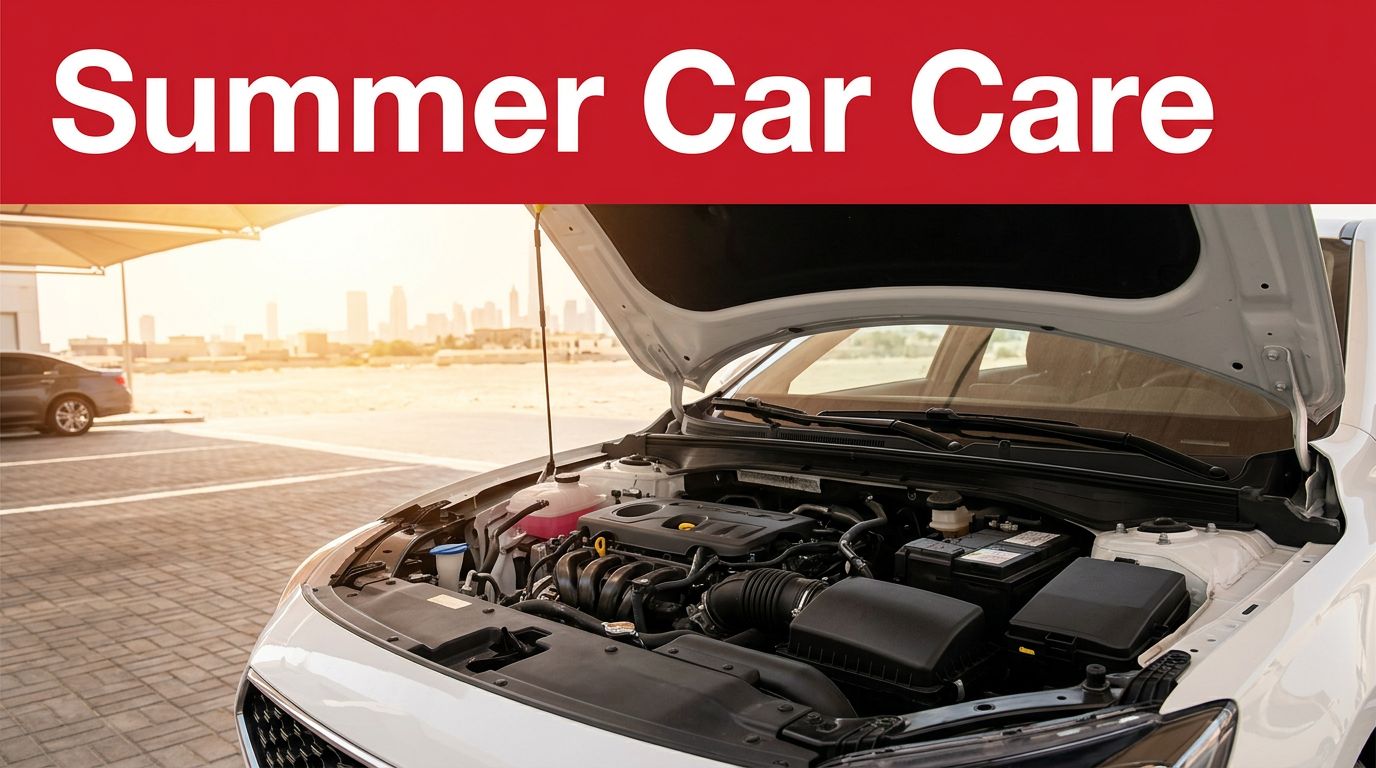
The cooling system deserves attention before summer traffic becomes heavy. With the engine completely cold, check the coolant reservoir. The level should sit between the minimum and maximum marks. The fluid should match your vehicle’s required type and should not look brown, muddy, or contaminated.
Never open the radiator cap while the engine is hot. Pressurised coolant can cause serious burns. If the coolant level keeps dropping, arrange a workshop inspection instead of repeatedly topping it up. A continuing loss can point to a hose, radiator, water pump, or other cooling-system fault.
Use the coolant mix listed in your owner’s manual. Many vehicles use a 50:50 coolant and distilled-water mixture, but the correct specification matters more than colour. Never rely on plain water as a permanent replacement. A local summer car-care reminder also highlights coolant levels and ageing rubber hoses as important checks in UAE heat.
Look at the radiator and air-conditioning condenser for dust, sand, and blocked fins. Light external cleaning can be completed carefully when the engine is cool, but bent fins and internal flushing need professional attention. Inspect visible hoses for cracks, swelling, leaks, or a soft, spongy feel. Belts should not appear frayed, glazed, or cracked.
Check the engine oil on level ground, using the procedure in your vehicle manual. Low oil can increase engine wear, especially during stop-start traffic. Follow the manufacturer’s oil grade and replacement schedule. If the level falls quickly after topping up, have the vehicle checked for leaks.
Watch the temperature gauge while driving. If it rises above its normal position, switch off the air-conditioning, pull over safely, and turn off the engine when appropriate. Do not continue driving to reach your destination. A short delay is safer than turning a cooling fault into major engine damage.
Keep the Air-Conditioning System Ready
A strong air-conditioning system is a safety feature in Dubai, not only a comfort feature. Excessive cabin heat can cause fatigue and reduce concentration, while a weak system makes every journey more difficult.
Before switching on the air-conditioning, open the windows briefly to release trapped hot air. Once the cabin starts cooling, use recirculation mode. It keeps cooled cabin air moving instead of constantly drawing in hot outside air. Avoid setting the system colder than necessary, and follow your vehicle’s climate-control guidance.
The cabin air filter collects dust and should be replaced according to the manufacturer’s schedule. Dusty UAE conditions may require closer attention than driving in a cleaner environment. A blocked filter can reduce airflow, create unpleasant smells, and make the blower work harder.
Low refrigerant, a damaged condenser, compressor problems, and leaks require a qualified technician. Don’t try to identify refrigerant by appearance or add an unknown product yourself. The correct refrigerant depends on the vehicle, and the system needs proper pressure testing. Ask the workshop to inspect the condenser, hoses, compressor, and cabin airflow rather than only topping up the gas.

A reflective windscreen sunshade helps limit heat inside the cabin. Covered parking is better, but shade is still useful when a covered space isn’t available. Legal window tinting can also reduce solar heat, provided it meets UAE requirements. Local drivers sharing Dubai summer car protection advice often focus on the same basics, shade, ventilation, and a reliable AC system.
Inspect Tyres, Brakes, and the Battery
Tyres carry the full load of summer driving, so inspect them before long commutes or road trips. Check pressure early in the morning, when the tyres are cold. Use the pressure shown on the driver’s door-jamb sticker or in the owner’s manual, not the maximum number printed on the tyre sidewall.
Look for cracks, bulges, cuts, uneven wear, and signs of dry rot. Check the spare tyre as well. The UAE legal minimum tread depth is 1.6 mm, but aiming for at least 3 mm gives you a better safety margin for summer driving. A small tread-depth gauge is inexpensive and useful for regular checks.
Tyre pressure can change with heat, load, and long-distance driving. Check it at least monthly and before a major journey. Don’t reduce pressure because the tyres look warm after driving, and don’t exceed the manufacturer’s recommendation.
Brake inspection is a workshop job, particularly if you hear grinding, feel vibration, notice pulling, or find the pedal spongy. Changes in braking performance should be checked immediately. A mechanic can inspect pad thickness, discs, brake fluid, calipers, and brake hoses.
The battery also needs attention in extreme heat. Look for loose connections and white or green corrosion around the terminals. A careful owner can clean light corrosion with the correct protective equipment, but a qualified technician should complete a battery health or load test. Consider testing an older battery before a long journey, especially if the engine cranks slowly or the car has electrical warning signs.
A second driver discussion about protecting cars in extreme heat can offer practical ideas, but online suggestions shouldn’t replace the vehicle manual or a professional inspection.
Protect the Paint and Interior from Heat and Sand
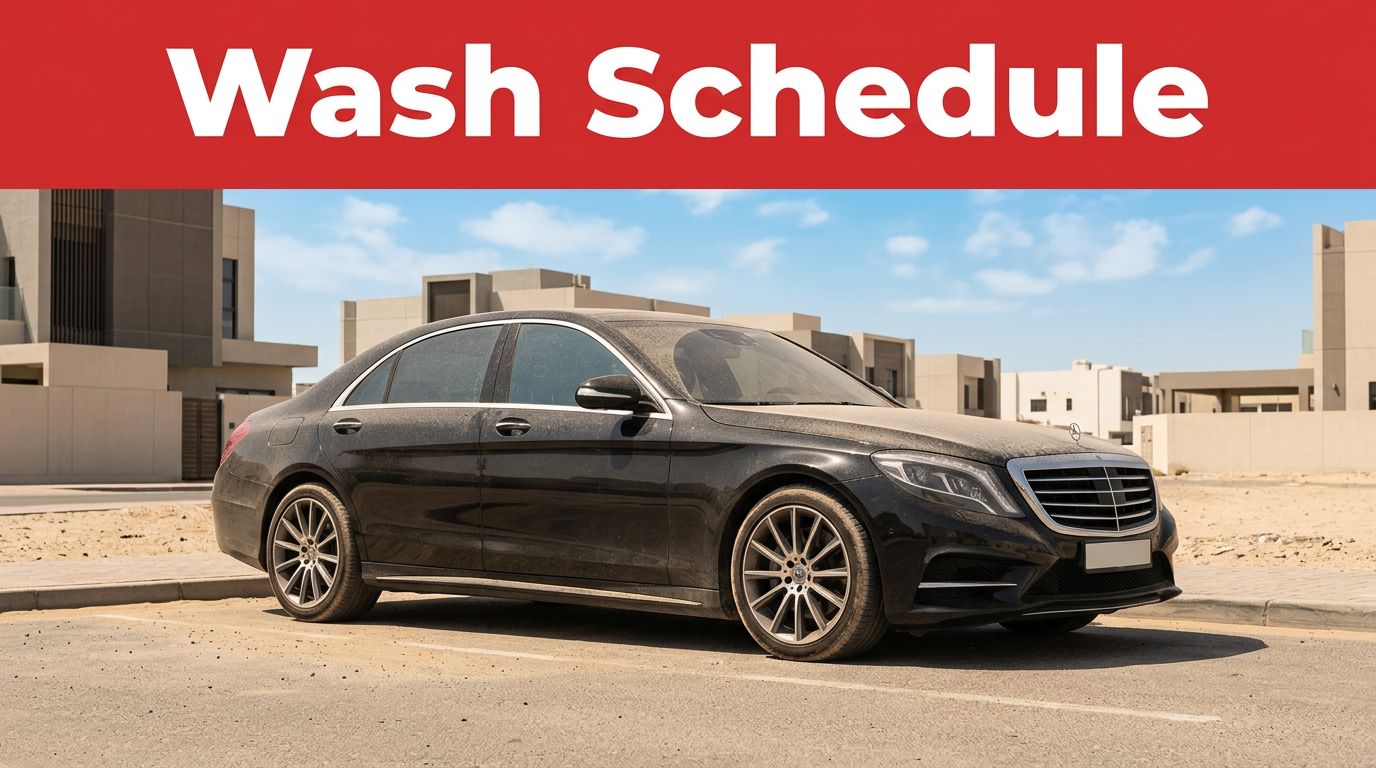
Dubai’s dust and sand can settle on every exterior surface. Rubbing a dry, dusty car with a cloth can create fine marks across the paint. Wash the vehicle in the early morning or evening, away from direct sunlight and hot body panels. This reduces water spots and gives cleaning products time to work properly.
Use a gentle wash method and clean microfiber towels. Harsh brushes can leave scratches, especially when sand is trapped in the bristles. If the car has a ceramic coating, wax, or paint protection film, follow the product or detailer’s care instructions. A protected surface is easier to clean, but it still needs regular washing.
Wax, polish, polymer sealants, and ceramic products offer different levels of protection and durability. Choose according to how the vehicle is parked and driven. A car kept outdoors near construction dust needs more regular cleaning than a car parked in a covered garage.
The interior also needs a summer routine. Clean dust from the dashboard, vents, door panels, and seat seams. Leather should be cleaned with a dedicated product and conditioned with a suitable UV protectant. Avoid household cleaners that can leave leather dry, shiny, or slippery. Fabric seats and carpets benefit from deep cleaning when dust and humidity create unwanted odours.
A professional service such as Bud Car Wash can combine an exterior wash with deep interior detailing and wax-and-polish care. This gives the vehicle a cleaner finish while removing the dust and residue that home cleaning can leave behind.
Prepare for Long Parking and Summer Road Trips
If you’ll leave Dubai for several weeks, prepare the car instead of parking it and forgetting it. Use covered parking where possible. Ask someone you trust to check for leaks, warning lights, unusual smells, pests, tyre pressure, and visible damage during your absence.
Don’t start the car for only two minutes. That short run may not bring the engine and exhaust system to full operating temperature. Follow the manufacturer’s storage instructions, or ask a mechanic for advice based on your vehicle. A battery maintainer may help when suitable power is available. For an electric vehicle or plug-in hybrid, follow the manufacturer’s guidance on charge level and whether the car should remain connected.
Before a road trip, check coolant, engine oil, windscreen washer fluid, tyre pressure, spare tyre, lights, wipers, and warning indicators. Have a workshop inspect belts, hoses, brakes, battery condition, and air-conditioning performance if the car is due for service. The right interval depends on the vehicle, engine, mileage, and manufacturer schedule, so don’t replace parts on an unsupported fixed timetable.
Keep water for yourself, a charged phone, and basic emergency supplies in the car. If the temperature gauge rises, a warning light appears, or you notice steam, stop in a safe place and call for assistance. Never stand in a live traffic lane to inspect the vehicle, and never remove a hot coolant cap.
A Simple Summer Maintenance Routine
Owner checks should be short and regular. Once a week, look at the oil and coolant levels when the engine is cold, then walk around the car for tyre damage, leaks, and low pressure. Before longer drives, check lights, wipers, the spare tyre, and the air-conditioning.
Use the service schedule for oil and filter changes, coolant service, transmission fluid, brake fluid, air filters, and belt replacement. A workshop should handle refrigerant work, brake repairs, electrical testing, overheating problems, and any fluid leak.
Keep a record of warning lights, unusual sounds, vibrations, and changes in performance. A small issue is easier to diagnose before heat and traffic place extra pressure on the vehicle. Consistent checks, proper shade, and careful cleaning give your car a stronger chance of staying safe and presentable through the Dubai summer.
Conclusion
Summer car care in Dubai is a combination of mechanical preparation, sensible parking, and regular cleaning. Check the items you can inspect safely, follow the manufacturer’s schedule, and involve a qualified mechanic when the job involves heat, pressure, brakes, refrigerant, or electrical systems.
A cool cabin and spotless finish are welcome, but safety comes first. When the temperature rises, preventive care helps keep your car reliable, comfortable, and ready for the road.