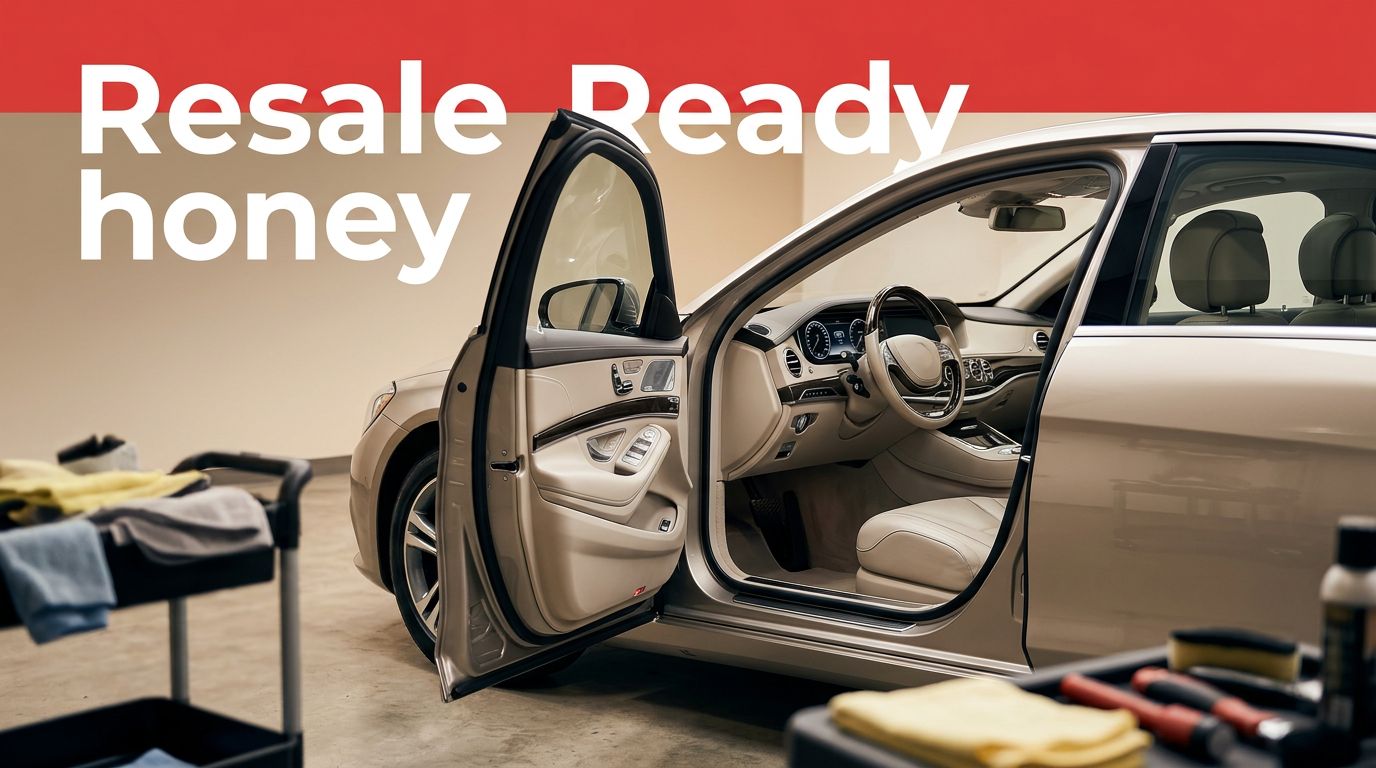
A clean car can attract attention, but a consistently cared-for car builds buyer confidence. When you prepare to sell or trade in your vehicle, its paint, interior, and overall presentation affect how people judge its condition.
Regular detailing helps protect those visible areas before small problems become expensive repairs. It won’t replace mechanical work or body repairs, but it can help your vehicle look cared for, reduce buyer concerns, and support a stronger resale position.
Key Takeaways
- Regular detailing protects paint, upholstery, trim, and other visible surfaces.
- A clean interior creates trust during private sales and trade-in inspections.
- Professional detailing supports resale appeal but doesn’t fix mechanical or structural problems.
- Exterior washing every one to two weeks and full detailing every three to six months suits many vehicles.
- A pre-sale detail should include both cleaning and a careful condition check.
How Detailing Supports Your Car’s Resale Value
Resale value depends on several factors, including the vehicle’s age, mileage, service history, accident record, demand, and mechanical condition. Detailing doesn’t change those facts. It improves the part buyers see first: the vehicle’s condition and presentation.
A car with faded paint, stained seats, dusty vents, and cloudy trim can appear neglected even when it runs well. Buyers may wonder what else the previous owner overlooked. A clean, well-presented vehicle gives a different impression. It suggests regular care and makes the condition easier to assess.
This is where car detailing resale value becomes relevant. Detailing can protect the surfaces that lose their appeal through daily use. It can also remove small distractions that make an otherwise sound vehicle look older than it is.
Private buyers often compare several vehicles before making a decision. A polished exterior and fresh interior can help your car stand out in photographs and during an inspection. Trade-in appraisals are also visual. A dealership will still assess mileage, service records, tires, and mechanical condition, but visible neglect may affect the first impression.
Detailing supports the value your vehicle has already earned through proper care. It doesn’t create value where serious maintenance problems remain.
A professional detail may include washing, decontamination, polishing, waxing, vacuuming, stain treatment, and trim care. The right service depends on the vehicle’s condition. Over-cleaning or aggressive polishing isn’t necessary for every car.
Protecting Paint and Exterior Condition
Your car’s exterior faces constant exposure to dust, road film, bird droppings, tree sap, strong sunlight, and moisture. In Dubai, fine sand and heat can make regular exterior care even more important. Dirt left on paint can hold moisture and contaminants against the surface. Bird droppings and tree sap can also mark clear coat if they remain for too long.
Routine washing removes loose dirt before it becomes harder to clean. Professional detailing adds more careful steps, such as wheel cleaning, paint decontamination, polishing, and wax or sealant application. These services improve gloss and help the paint stay easier to maintain between appointments.

A glossy finish won’t hide major scratches, dents, peeling clear coat, or mismatched panels. However, it can make the paint look healthier and help a buyer see the vehicle’s actual condition. Light surface marks may improve with safe polishing, while deep scratches usually need bodywork or repainting.
Wheels and tires also affect resale appeal. Brake dust, road grime, and dull rubber can make a car look poorly maintained. Clean wheels and properly dressed tires complete the exterior presentation without changing the vehicle itself.
For everyday protection, use a proper wash method and avoid harsh household detergents. A professional car wash can provide safer products and controlled drying methods. Regular care is less costly than allowing contamination and neglected surfaces to build up over several years.
Why Interior Detailing Matters to Buyers
Many buyers spend more time examining the interior than the exterior. They sit in the driver’s seat, inspect the dashboard, open the storage areas, and check the condition of the seats and carpets. The interior is also where buyers imagine spending every day with the vehicle.
Dust, food marks, odors, pet hair, and stained upholstery can reduce confidence quickly. A clean cabin feels more comfortable and gives the vehicle a better-maintained appearance. Leather or synthetic seats can also benefit from suitable cleaning and conditioning, while fabric seats may need stain treatment and extraction.

Interior detailing should cover more than visible dashboard surfaces. A thorough service may include vacuuming carpets and seats, cleaning door panels, treating cup holders, wiping vents, removing marks from trim, and cleaning glass without leaving haze. Floor mats deserve attention because they collect sand, dirt, and moisture.
Odor treatment also matters. Air freshener can cover a smell for a short time, but it doesn’t remove the source. Food residue, damp carpets, smoke, and pet odors need proper cleaning. If a seat has a permanent stain or damaged fabric, detailing may improve its appearance but won’t restore it completely.
A clean interior can also help preserve materials during ownership. Removing grit reduces abrasion on seats and trim. Cleaning spills early can prevent stains from becoming permanent. These small habits help the cabin remain presentable when you eventually sell.
How Often Should You Detail Your Car?
The right detailing schedule depends on driving habits, parking conditions, weather, and how carefully you maintain the vehicle between services. A car parked outdoors in heat, dust, or direct sun needs more frequent attention than a vehicle kept in a covered garage.
A practical routine for many owners looks like this:
- Wash the exterior every one to two weeks, or sooner after heavy dust, bird droppings, or road grime.
- Clean and vacuum the interior every two to four weeks.
- Schedule a deeper interior and exterior detail every three to six months.
- Apply wax or paint sealant according to the product’s expected durability and your driving conditions.
- Arrange a more complete detail several weeks before selling, not on the same day as the listing.
Regular washing handles surface dirt, while full detailing addresses areas that routine cleaning misses. Waiting until sale time can leave stains, dull paint, and embedded contamination that require more time and cost to correct.
A seasonal schedule can also work well. Many owners choose a full detail before periods of heavy heat, dust, or travel. The vehicle then receives protection before demanding conditions rather than after visible damage appears.
Professional detailing is useful when you need consistent results or when the vehicle needs specialist tools. Bud Car Wash offers exterior washing, deep interior cleaning, and wax-and-polish services for owners who want careful, dependable maintenance. Eco-friendly products and proper workmanship can support a clean finish without relying on overly aggressive treatment.
Pre-Sale Detailing Checklist
Plan your pre-sale detail around the areas a buyer will see, touch, and smell. Start with a mechanical inspection separately, because detailing cannot correct warning lights, worn brakes, engine faults, poor air conditioning, or unsafe tires.
Before taking photographs or meeting a buyer, check the following:
- Wash the body, roof, mirrors, grille, door frames, and lower panels.
- Clean the wheels and remove visible brake dust.
- Treat the tires so they look clean without an excessive greasy finish.
- Remove sand, dirt, and residue from floor mats and carpets.
- Vacuum seats, gaps, storage areas, and the space around the pedals.
- Clean the dashboard, center console, door panels, cup holders, and vents.
- Treat suitable leather, vinyl, or plastic surfaces with the correct product.
- Clean the inside and outside of all windows and mirrors.
- Remove personal items, rubbish, and old parking documents.
- Address noticeable odors at their source.
- Polish light paint marks only when the finish can be treated safely.
- Check for stains, scratches, dents, paint damage, and torn trim before listing.
- Gather service records, inspection documents, spare keys, and maintenance receipts.
Take clear photos after the vehicle is clean and dry. Photograph the exterior in even light, then show the front seats, rear seats, dashboard, cargo area, wheels, and any existing damage. Honest photos protect trust and help serious buyers understand the vehicle before they visit.
Don’t hide defects with heavy dressing or shine products. Excessive gloss can make surfaces look artificial and may draw attention to cracks, worn trim, or uneven paint. A clean, natural finish is more reassuring.
Detailing Is Not a Substitute for Repairs
A polished car may look more attractive, but appearance is only one part of resale value. A buyer may still check the engine, transmission, suspension, brakes, tires, battery, cooling system, and air conditioning. Service history often matters more than a fresh coat of wax.
Handle safety and mechanical repairs before scheduling the final detail. Fix damaged lights, replace unsafe tires, repair leaking fluids, and address dashboard warning lights. Bodywork may also be needed for serious dents, deep scratches, rust, or peeling paint.
Keep invoices for completed work. Clear records help show that the vehicle received proper care. Detailing then presents that care in the best condition, rather than trying to distract from missing maintenance.
The strongest resale preparation combines both sides: a mechanically sound vehicle and a clean, honest presentation. Buyers are more likely to feel confident when the car looks cared for and the paperwork supports its history.
Conclusion
Regular detailing helps protect the surfaces buyers judge first. Clean paint, maintained wheels, fresh upholstery, clear glass, and an orderly cabin can support resale appeal and reduce concerns during a sale.
The best results come from steady care, not a rushed appointment after years of neglect. Keep up with washing, schedule deeper detailing every few months, complete needed repairs, and prepare the vehicle carefully before listing it. A well-maintained car gives its condition a fair chance to speak for itself.