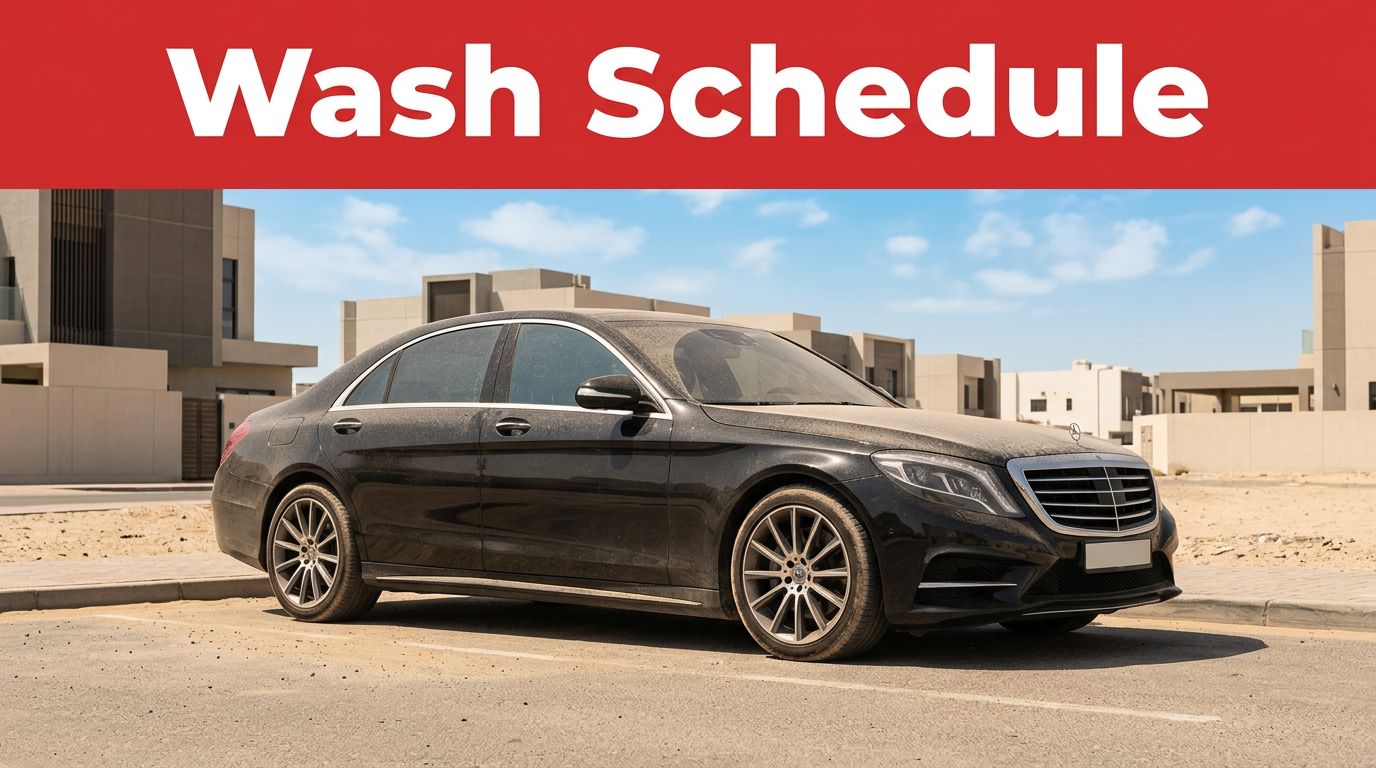
Washing your car in the middle of a hot summer day can leave water spots, soap marks, and uneven wax. The best time to wash your car in summer is usually early morning or late afternoon, when the paint is cooler and water evaporates more slowly.
Timing matters even more in hot climates such as Dubai. Strong sunlight, warm panels, dust, and mineral-rich water can affect the final finish. Choose the right hours, work in the shade, and dry the vehicle before water dries on its own.
Key Takeaways
- Early morning and late afternoon are usually the best washing times in summer.
- Avoid washing hot panels under direct sunlight.
- Check the paint with the back of your hand before applying soap.
- Wash one section at a time and dry it immediately.
- Follow local water restrictions and choose a professional service when conditions are too hot.
Best Time Wash Car Summer Drivers Should Choose
The most suitable washing window is early morning, before the sun has heated the vehicle. A start time around sunrise or shortly after is often practical. The car has had time to cool overnight, and the surrounding air is usually more comfortable for the person doing the work.
Late afternoon can also work well, especially once direct sunlight becomes weaker. However, the exact timing depends on the season, parking location, and local temperature. A car parked on dark asphalt may remain hot well into the evening.
| Washing time | Suitability | What to consider |
|---|---|---|
| Early morning | Excellent | Cool paint and slower evaporation |
| Late afternoon | Good | Wait until direct sun weakens |
| Midday | Poor | Hot panels and fast water drying |
| After sunset | Suitable with care | Good temperatures, but visibility may be limited |
Shade is more important than the clock. A shaded driveway, covered parking area, or professional wash bay can make a daytime wash safer for the paint. If the vehicle is exposed to direct sunlight, wait until the body panels cool before starting.
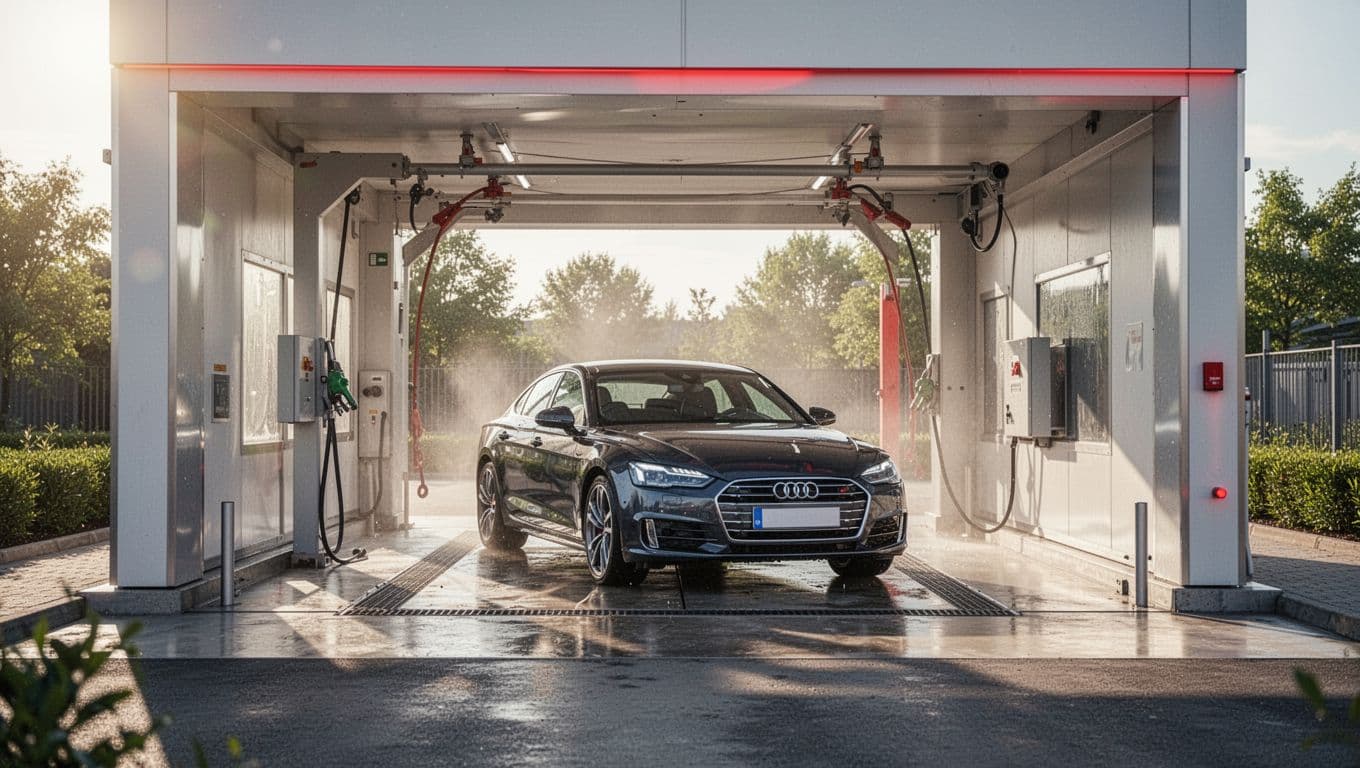
A professional wash bay provides shade, suitable equipment, and a controlled process during hot weather.
Why Midday Sun Creates Problems
Summer sunlight does more than make the wash uncomfortable. It heats the paint, glass, wheels, and trim. When water or shampoo lands on these surfaces, it can dry before you rinse or wipe it away.
This leaves behind mineral deposits and soap residue. The marks may look like small white spots at first, but they can become harder to remove if they remain on the paint. Glass and dark-colored vehicles often show these marks more clearly.
Hot paint also reduces your working time. A panel can dry while you are still washing another area. This creates an uneven finish, with some sections clean and others covered in dried droplets.
Direct sunlight makes it harder to see whether the surface is fully clean. Reflections can hide dust, streaks, and missed areas. Once the car moves into a cooler location, these defects become easier to notice.
Water should be removed from the paint before the sun removes it for you.
Washing in the shade doesn’t prevent every water spot, but it slows evaporation and gives you enough time to rinse and dry correctly. It also protects wax, sealants, and detailing products from drying too quickly during application.
How to Tell if Your Car Paint Is Too Hot
You don’t need specialist equipment to make a basic check. Park the vehicle in the shade for several minutes, then place the back of your hand lightly on a clean section of paint.
If the panel feels warm but comfortable, washing can usually begin. If it feels too hot to keep your hand there for a few seconds, wait longer. Don’t press hard, and avoid touching the surface immediately after a long drive.
Check more than one panel. The bonnet and roof often heat faster because they receive direct sunlight. The side facing the sun may also be warmer than the shaded side.
An infrared thermometer can provide a more consistent check, but there isn’t one universal temperature that makes every wash unsafe. Product instructions, paint condition, shade, wind, and humidity all affect the result. A surface that feels too hot for your hand is a clear reason to wait.
The water test is also useful. Apply a small amount of clean water to an inconspicuous area. If it spreads briefly and remains wet, the panel may be ready. If it disappears almost immediately, move the car into deeper shade and allow it to cool.
Never begin with soap on a hot panel. Rinse first, check the surface again, and work only when water can remain wet long enough to be rinsed away.
A Practical Summer Car Washing Routine
A simple routine keeps the process controlled and reduces wasted water. Prepare all equipment before turning on the hose, including a pH-neutral car shampoo, two clean buckets, a soft wash mitt, wheel tools, and a large microfiber drying towel.
1. Choose shade and prepare the vehicle
Move the car under cover whenever possible. Close the windows, remove personal items, and make sure the doors and boot are properly shut.
Start with the wheels if they’re heavily dirty. Brake dust and road grime can require separate tools, and using the same mitt on the body can transfer abrasive particles to the paint.
2. Rinse loose dirt first
Use a gentle stream or pressure washer to remove loose dust, sand, and surface grit. Keep the nozzle at a safe distance and avoid forcing water into damaged seals, electrical connections, or chipped paint.
A pre-rinse reduces friction during hand washing. This matters in summer because dusty vehicles can collect fine particles quickly, especially in areas exposed to road traffic and construction.
3. Wash one section at a time
Apply the shampoo to a small section, starting at the roof and working down. Rinse the mitt often in a separate bucket before loading it with fresh shampoo.
Keep the vehicle wet while you work, but don’t flood the entire car if the sun is strong. Washing one panel at a time gives you better control and prevents soap from drying on the surface.
4. Rinse thoroughly
Remove all shampoo before it dries. Pay attention to mirrors, door handles, window trim, wheel arches, and the lower sections of the doors.
A final rinse with clean water helps remove loose residue. If your local water supply leaves spots easily, drying becomes especially important.
5. Dry immediately
Use a clean microfiber drying towel and gently blot or glide it across the panels. Don’t allow the car to air-dry in direct sunlight.
Open the doors and wipe the edges, fuel flap, boot opening, and mirror housings. Trapped water can run out later and create fresh streaks on an otherwise clean vehicle.
Adjust Your Wash for Dubai’s Summer Conditions
Dubai’s summer heat changes how quickly water dries. Dust can settle on the vehicle soon after washing, while humidity near the coast can make the surface feel damp without preventing mineral spots.
Choose a covered area and avoid washing during the strongest afternoon heat. If the vehicle has been parked outside, let it cool before applying shampoo. A shaded professional wash bay is often more practical than a driveway exposed to hot air and reflected heat.
Use clean towels and fresh wash water. Dirty water can move sand across the paint, while an old towel can leave lint or fine marks. Eco-friendly products can help reduce harsh runoff, but they still need to be used according to their instructions.
Water use also depends on local rules. Some communities, buildings, or municipalities may restrict hose washing, limit runoff, or require approved wash areas during dry periods. Check the current requirements where you live before washing at home.
A rinseless or water-saving wash may be suitable for lightly dusty vehicles, but heavy sand and mud should be removed with enough lubrication and water to prevent scratching. When restrictions apply, a professional car wash can provide controlled water use and proper drainage.
When Professional Washing Makes More Sense
Home washing is suitable when you have shade, clean equipment, and enough time to complete the process correctly. Professional service becomes more useful when the vehicle is heavily soiled, the paint is hot, or water restrictions make driveway washing unsuitable.
A quality exterior wash removes dust and road film without relying on rough brushes or rushed wiping. Deep interior detailing addresses sand, stains, and heat-related buildup inside the cabin. Wax and polish services can also improve gloss and add a layer of protection after the surface is clean.
Professional technicians can work around sensitive trim, wheels, glass, and paint defects. They also have suitable drying towels, wash mitts, and products for different finishes.
If you can’t provide shade or dry the vehicle immediately, delaying the wash is safer than working under harsh sun. A careful process protects the finish and gives you a cleaner result that lasts longer.
Conclusion
The best time to wash your car in summer is early morning or late afternoon, with shade taking priority over a fixed hour. Check the paint before washing, avoid hot panels, clean one section at a time, and dry the vehicle before water spots form.
For Dubai drivers, dust, heat, humidity, and water restrictions all affect the right approach. A controlled home wash or professional service keeps the vehicle clean, refreshed, and better protected throughout the summer.