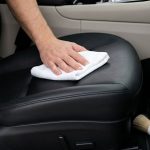
Most paint scratches happen in the driveway, not on the road. A clean finish can pick up swirl marks from a dirty mitt, the wrong towel, or a cleaner that was never meant for automotive paint.
If you wash and detail your own car, small habits matter. The right tools protect the clear coat, while the wrong ones leave behind fine marks that show up in sunlight.
The good news is that most car detailing mistakes are easy to avoid once you know what to watch for. A careful process keeps your paint cleaner, smoother, and easier to maintain.
Key Takeaways
- Dirty wash mitts, sponges, and towels can drag grit across the paint.
- Washing in direct sunlight makes soap and water dry too fast.
- Household cleaners can strip protection or leave paint looking dull.
- A clean bucket setup, soft microfiber, and light pressure do more than hard scrubbing.
- When the paint is already damaged, a professional detail is often the safer choice.
Dirty Wash Mitts and Sponges Turn Into Sandpaper
A wash mitt should remove dirt, not spread it around. Once grit gets trapped in the fibers, every pass across the panel can leave fine scratches.
Sponges are a bigger risk. They hold dirt at the surface and press it back into the paint. If a mitt or sponge hits the ground, stop and rinse it well before it touches the car again. In many cases, replacing it is the safer call.
Keep separate tools for the body, wheels, and lower panels. Wheels collect brake dust and road film, and that grime does not belong on glossy paint. For a quick visual refresher, this common detailing mistakes video shows how fast dirty tools can damage a finish.
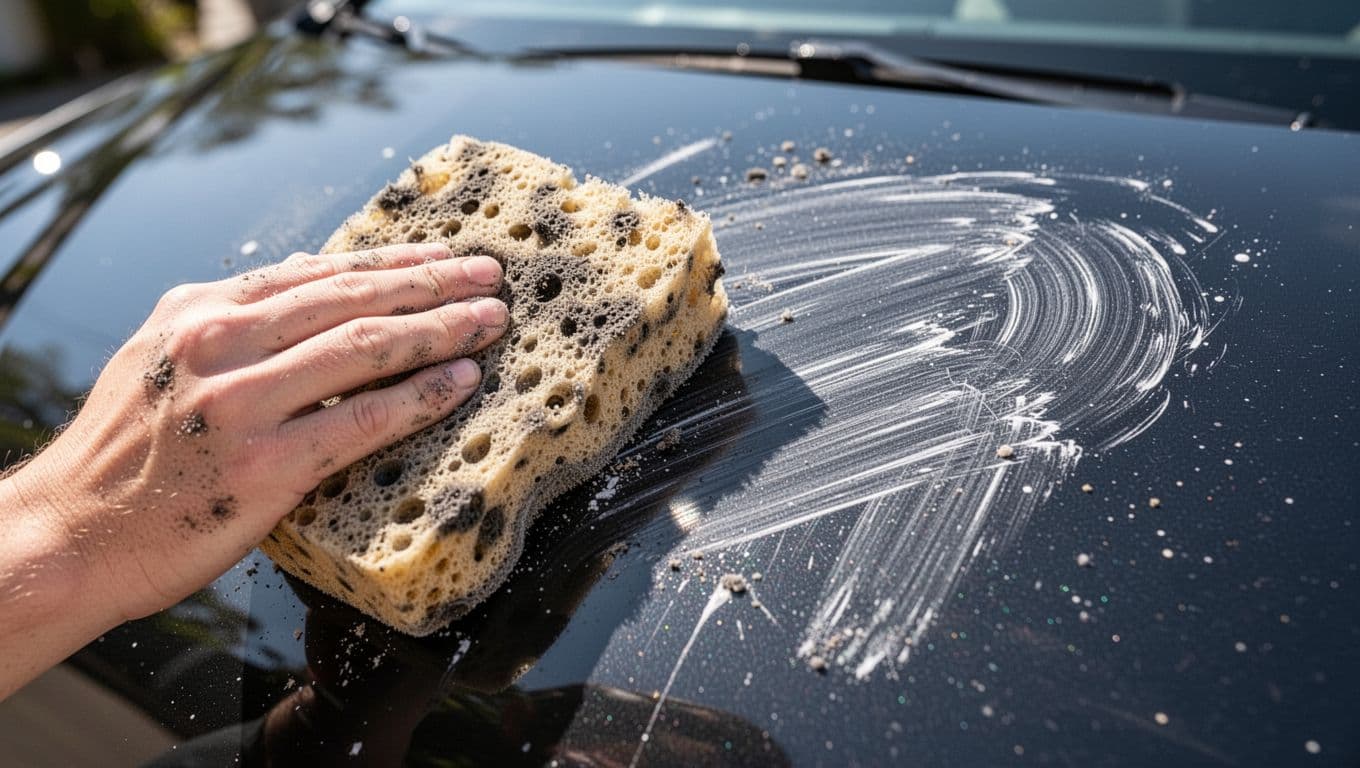
Washing in Direct Sunlight Leaves Marks Behind
Heat changes the way your wash products behave. On a hot panel, soap dries fast. Water spots form quickly, and you end up wiping more often than you should.
That extra wiping is where the damage starts. The towel or mitt drags across drying residue, and the residue can act like a light abrasive. Dark paint shows it first, but every color can be affected.
Wash in shade whenever possible. Early morning and late afternoon are easier on the paint than peak afternoon sun. If you have to work outside, rinse one section at a time and keep the surface wet until you are ready to dry it. The less time dirt and soap sit on the panel, the better the result.
Household Cleaners Are Too Harsh for Paint
Dish soap, glass cleaner, and all-purpose cleaners are made for home surfaces, not automotive finishes. They can strip wax, weaken protection, or leave trim and paint looking dry and dull.
It’s a common shortcut, and it usually costs more later. Once protection is stripped away, dirt sticks faster and the car becomes harder to clean safely. That means more rubbing, more pressure, and more chances to mark the paint.
Use a dedicated car shampoo for painted panels. If you need a stronger product for wheels or tar, keep it off the body unless the label says it’s safe for paint. The same rule applies to household sponges and paper towels. If it was made for the kitchen, it probably should stay there.
Improper Drying Causes Some of the Worst Scratches
Drying is one of the easiest places to create swirl marks. A rough towel, an old bath towel, or a quick grab from the laundry pile can leave fine scratches behind.
The safest choice is a plush microfiber drying towel or a blower for the loose water. Press lightly, then glide the towel without forcing it across the panel. If the towel feels damp and heavy, switch to a dry one. A saturated towel starts pushing dirt instead of lifting water.
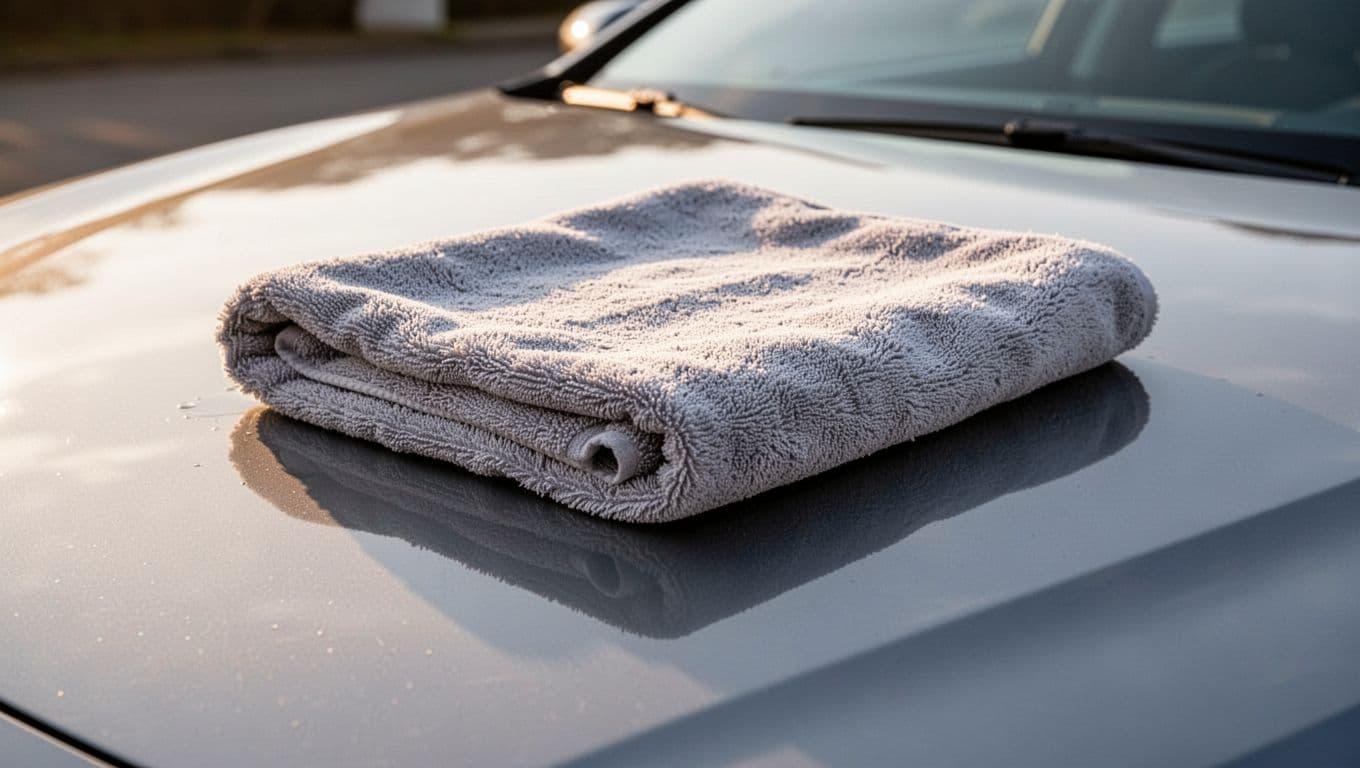
A blower is even better for mirrors, trim edges, and badges where water likes to hide. One careful drying pass can save you from the kind of marks that only show up after the car sits in the sun.
Poor Bucket Practices Drag Dirt Back Onto the Car
A single bucket can look clean and still be full of dirt. Every time you rinse your mitt in the same water, the grime stays in play. Then it goes right back onto the paint.
The two-bucket method is simple and effective. One bucket holds soapy wash water. The other holds rinse water. After each panel, rinse the mitt before loading it with soap again. A grit guard at the bottom helps keep debris away from the mitt.
Do not use the same bucket for wheels and body panels. Brake dust is abrasive, and it does not belong anywhere near the paint. If your water turns cloudy or gritty, change it. Clean tools and clean water are part of the job.
Skipping the Pre-Rinse Makes Everything Harder
If you touch dirty paint before loosening the grit, you are doing extra work with the wrong kind of pressure. The first rinse removes loose dust, sand, and road film before your mitt ever touches the surface.
That step matters more than many beginners think. A strong pre-rinse, foam cannon, or foam gun helps lift debris so it can run off the car. When the surface is prepped properly, the mitt glides instead of grinding.
Work from top to bottom. The upper panels are usually cleaner than the lower doors, rocker panels, and bumpers. Save the dirtiest areas for last, then rinse them well before moving on. This small habit keeps the wash safer and more controlled.
Scrubbing Too Hard Does Not Clean Better
Hard pressure does not make a car cleaner, it makes scratches more likely. If a spot needs serious force, the dirt probably needs to be softened first, not attacked with stronger rubbing.
Use light pressure and straight, overlapping passes. Avoid pressing down on stubborn bugs, tar, or tree sap. Those spots need a proper pre-treatment, not a tougher wrist. If you scrub them dry, you can leave a mark even with a good microfiber towel.
A gentle process also helps you spot the difference between dirt and bonded contamination. If something stays on the paint after a normal wash, stop and treat it correctly. That keeps the finish in better shape and reduces the risk of correction work later. A paint-damaging detailing overview covers the same basic lesson, do less force and more preparation.
Waiting Too Long to Get Professional Help
Some paint is beyond a careful home wash. If you already see heavy swirl marks, oxidation, or deep scratches, another DIY session can make the surface look worse.
Professional detailing is the safer move when the finish needs correction, not just cleaning. A trained detailer can inspect the paint, choose the right products, and use machine polishing only when it makes sense. That matters on black paint, soft clear coat, and cars that have been washed the wrong way for years.
It also matters after bodywork or when the finish has special care requirements. Matte paint, ceramic-coated vehicles, and delicate finishes need a different touch. When the job is no longer basic maintenance, expert help protects the result.
Conclusion
Most scratches come from the same few habits, dirty tools, rough drying, harsh cleaners, and too much pressure. Once those are removed from your routine, paint care becomes much easier.
A safe wash is steady, not aggressive. Clean tools, cool panels, and patient technique do more for your finish than force ever will.
If the paint is already marked or the job feels too risky, a professional detail is the safer choice. That is how you keep a clean car looking clean.

Sammie O is the owner of Bud Car Wash, a 24 hour hand car wash and detailing shop at Shop #7, 44, 22nd Street, Ras Al Khor Industrial Area 2, Dubai. He writes the car care guides on this site based on work done in his own bay.
View All Articles