
A clean car can lose its fresh appearance within a few days. Dust settles on the paint, crumbs collect between the seats, and fingerprints quickly cover the interior surfaces. Regular washing helps, but simple habits between washes make the biggest difference.
You don’t need a full detailing kit or hours of free time. A few car-safe products, a short weekly routine, and quick attention to spills or bird droppings can help keep your car clean for longer. Start with the areas that collect dirt fastest.
Key Takeaways
- Remove dust, crumbs, and spills before they become harder to clean.
- Use clean microfiber towels and products made for automotive surfaces.
- Never rub dry dirt, bird droppings, or road salt across the paint.
- Adjust your cleaning routine for pollen, mud, heat, and heavy dust.
- Schedule professional cleaning when dirt has built up beyond a quick wipe.
Create a Simple Daily Car Cleaning Routine
The easiest way to maintain a clean car is to remove small messes before they build up. A daily routine only takes a few minutes and prevents the interior from becoming cluttered.
Take out empty bottles, food packaging, receipts, and other rubbish each time you leave the vehicle. If you carry children, keep a small waste bag in the car. Replace it regularly so the interior stays fresh and organised.
Shake out loose floor mats when dirt is visible. For fabric mats, use a handheld vacuum or your home vacuum with a clean attachment. Rubber mats can be removed and rinsed when needed, but let them dry fully before placing them back inside. Moisture trapped under a mat can create unpleasant odours.
Keep a small set of supplies in the boot or garage. A useful basic kit includes:
- Clean microfiber towels for dust and fingerprints
- A soft interior detailing brush
- An automotive interior cleaner
- A small rubbish bag
- A handheld vacuum or vacuum attachment
Use one microfiber towel for interior surfaces and another for glass. Don’t use the same cloth on dirty wheels, dashboard panels, and windows. Grit trapped in the towel can cause scratches, while greasy residue can leave glass streaked.
Wipe the steering wheel, gear selector, door handles, and centre console once or twice a week. These are high-touch areas that collect skin oils and dust quickly. Use a lightly damp microfiber cloth first, then apply a suitable interior cleaner if the surface needs more attention.
Avoid household disinfectants, bleach, abrasive sponges, and products with strong solvents. They may damage leather, vinyl, plastic, or protective coatings. Always follow the vehicle manufacturer’s instructions when cleaning sensitive materials.
Keep the Interior Fresh With a Weekly Routine
A weekly interior clean takes longer than a daily tidy, but it still doesn’t need to become a major project. Work from the top of the cabin down, then finish with the floor. This prevents dust from falling onto areas you have already cleaned.
Start by removing personal items, child seats where practical, and loose mats. Open the doors and inspect the gaps around the seats. Use a soft detailing brush to loosen dust from air vents, buttons, seams, and cup holders. Follow with a vacuum to collect the loosened dirt.
Vacuum slowly around seat rails, under the front seats, and along the edges of the carpet. These areas often hold sand, food particles, and fine dust that a quick pass will miss. Use a narrow attachment carefully, without forcing it into electrical connections or delicate trim.
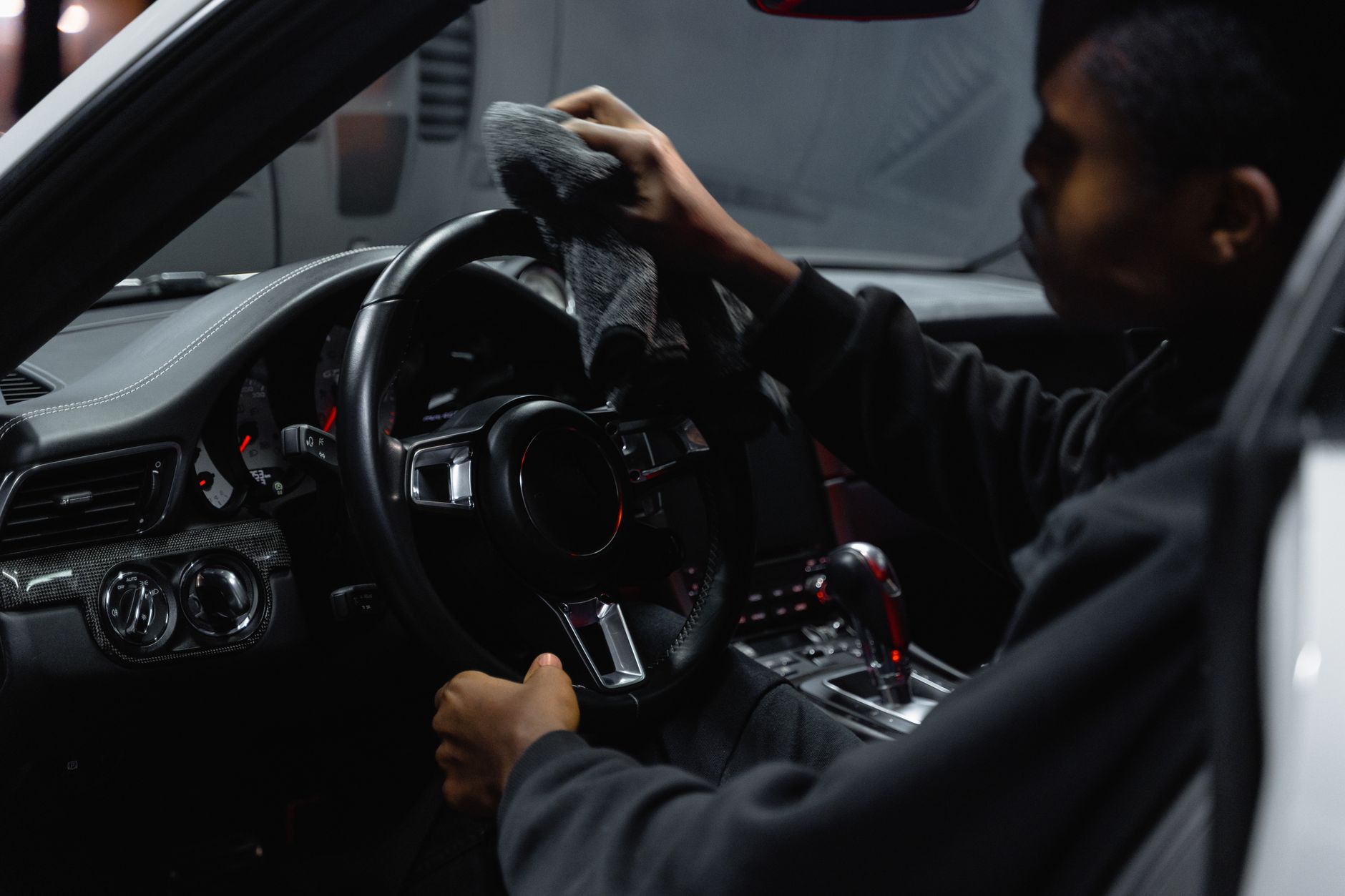
Photo by Tima Miroshnichenko
Clean hard surfaces with a product labelled safe for automotive interiors. Spray the product onto the cloth, not directly onto switches, screens, speakers, or vents. This gives you better control and helps prevent liquid from entering small openings.
Leather seats need a different method from fabric upholstery. Use a leather cleaner approved for automotive leather, then apply a suitable conditioner if the material requires it. Don’t use oily household products, as they can leave the seats slippery and attract more dust.
Fabric seats should be treated quickly after spills. Blot liquid with a clean towel instead of rubbing it deeper into the fibres. Use an upholstery cleaner according to its instructions, and allow the area to dry with the doors open in a safe, ventilated location.
Clean the inside of the windows last. Automotive glass cleaner and a clean, lint-free microfiber towel provide a clearer finish than paper towels. Wipe in one direction on the inside and another direction on the outside, so you can identify which side has streaks.
A light, clean scent is preferable to heavy air fresheners. Avoid spraying fragrance onto dashboards, seats, or roof lining. Strong products can leave residue and may irritate passengers.
Clean the Exterior Without Damaging the Paint
Between full washes, exterior maintenance should focus on removing harmful contamination without rubbing dirt across the paint. Dry dust may look harmless, but wiping it with a rough cloth can create fine marks.
If the car has a light layer of loose dust, use a proper rinse or a waterless wash product designed for that purpose. Follow the product instructions carefully and use several clean microfiber towels. Fold the towel into sections and change to a clean side after each pass.
Don’t use a waterless product on heavy mud, thick sand, or gritty road dirt. The surface needs more lubrication and rinsing to prevent scratching. In that situation, book a proper wash or rinse the vehicle thoroughly before any contact cleaning.
A quick exterior check should include the following areas:
- Door handles and mirrors, where fingerprints collect
- The lower doors and rear bumper, where road dirt gathers
- The windscreen and side windows, where dust affects visibility
- Wheels and tyres, where brake dust and mud build up
- The boot opening and door jambs, where loose dirt transfers indoors
Use a pH-neutral car shampoo for regular washing. Dish soap can remove protective products from the paint and may leave the surface looking dull. Choose a soft wash mitt and rinse it often. A separate wheel brush should never be used on painted body panels.
Bird droppings need immediate attention because they can mark the clear coat, especially in hot weather. Place a damp microfiber towel over the spot for a few minutes to soften it. Lift the residue gently, then rinse or clean the area with a car-safe product. Never scrape or rub dried droppings with a dry cloth.
The same care applies to tree sap, insects, and other sticky deposits. Allow the correct automotive cleaner to loosen the material before wiping. Repeated rubbing is not a substitute for proper lubrication.
Adjust Your Car Cleaning Routine by Season
Different conditions create different cleaning problems. A routine that works during mild weather may not be enough when pollen, mud, salt, or intense heat is present.
Pollen can cover the paint, glass, and air intake areas during spring. Remove it with a gentle rinse or an automotive detail spray and a clean microfiber towel. Avoid using a dry feather duster on painted surfaces, as it can drag fine particles across the finish. Replace or clean the cabin air filter according to the vehicle manufacturer’s schedule if pollen is entering the interior.
Road salt is a serious concern in cold climates. Salt residue can collect around wheel arches, lower doors, brake components, and underbody areas. Rinse these sections with clean water after driving on treated roads. Pay attention to door jambs and rubber seals, where residue can remain hidden.
Mud should be allowed to soften with water before cleaning. Wiping thick, dry mud can scratch the paint and spread grit over a larger area. Use a hose or pressure washer at a safe distance, then complete the wash with a pH-neutral car shampoo.
Hot, dusty conditions require extra attention to the paint and interior. In Dubai and other dry climates, sand can settle quickly on horizontal panels, glass, and dashboard surfaces. Park in shade when possible, but don’t cover a dirty car with a tight cover. Sand trapped between the cover and paint can cause marks when the cover moves.
Direct sunlight also dries cleaning products too quickly. Clean one small area at a time and avoid working on hot panels. A shaded location gives you more control and reduces streaking.
Rain doesn’t always leave the car clean. Dust and rain can combine into a thin film that settles on the paint and windows. Remove it with a proper wash instead of using a dry towel. Check the windscreen, mirrors, and lights first because clear visibility matters more than a perfect shine.
Know When a Professional Wash Is the Better Choice
Quick maintenance works best when dirt is light and the vehicle is already in good condition. It cannot replace a proper wash after heavy mud, long road trips, bird droppings left in the sun, or weeks of dust buildup.
A professional exterior wash provides controlled rinsing, safe cleaning products, and proper drying. Interior detailing is also useful when stains, odours, sand, or dirt have reached areas that are difficult to clean at home.
Wax-and-polish treatments can refresh the finish and add a layer of protection, but the paint should be cleaned properly first. Applying protection over grit or contamination can trap the problem against the surface.
Choose a car wash that uses clean tools, quality products, and methods suited to your vehicle. Bud Car Wash provides exterior washing, interior detailing, and wax-and-polish services for different vehicle needs. Professional care gives you a clean starting point, while small routines help maintain the result between appointments.
Keep Your Car Looking Clean for Longer
A tidy car doesn’t depend on washing it every day. Remove rubbish, vacuum loose dirt, wipe high-touch areas, and deal with exterior contamination before it dries. These small actions protect the finish and make every full wash more effective.
Use the right product for each surface, avoid dry rubbing, and adjust your routine for pollen, road salt, mud, bird droppings, sand, and heat. When the car needs more than a quick clean, professional washing and detailing provide a reliable reset. With consistent care, a fresh-looking vehicle becomes a simple routine rather than a difficult task.