Washing your car in the driveway feels harmless, but traditional wash routines often send harsh petroleum residues and phosphates straight into local storm drains. Switching to an eco friendly car cleaner changes that impact without sacrificing a showroom shine. You protect your vehicle’s clear coat and keep toxic runoff out of local waterways.
The automotive care market overflows with green labels, but finding genuinely safe formulas requires looking past clever marketing. You need products that balance cleaning power with real environmental responsibility.
Key Takeaways
- Traditional car care products often contain heavy phosphates and petroleum distillates that harm local watersheds.
- Choosing a verified eco friendly car cleaner helps preserve your vehicle wax layer and clear coat over time.
- Biodegradable, plant-based formulas break down safely without leaving chemical residue on paint or glass.
- Proper wastewater management matters just as much as using green chemistry during your wash routine.
Cutting Through Greenwashing in Auto Detailing
The car care industry lacks a strict, regulated definition for the term green. Any manufacturer can slap a leaf icon on a bottle and call it safe. You have to read ingredient lists instead of trusting front-label promises.
Many conventional soaps rely on harsh surfactants that strip wax instantly. They also contain ingredients that violate federal toxic substance standards when washed into the street. According to guidelines from King County’s hazardous waste program on eco-friendly car washing, true green products avoid phosphates, chlorine, and petroleum solvents entirely.
When you pick an eco friendly car cleaner, look for third-party certifications or clear disclosures of plant-based surfactants. These formulas lift road grime using renewable ingredients derived from coconut or corn rather than crude oil. They protect your paint while keeping harmful pollutants out of the ground.
Evaluating Plant-Based Ingredients Versus Harsh Chemicals
Traditional degreasers use strong alkaline compounds to melt away brake dust and grease. Those same chemicals etch aluminum wheels and dry out rubber trim if they dry on the surface. Plant-based alternatives use natural citrus extracts or enzyme-based cleaners to break down organic buildup safely.
| Cleaner Type | Active Ingredients | Impact on Clear Coat | Environmental Safety |
|---|---|---|---|
| Traditional Degreaser | Petroleum solvents, harsh alkalis | Strips wax, dulls finish over time | Toxic runoff, harms aquatic life |
| Standard Wash Soap | Synthetic surfactants, artificial dyes | Moderate risk of drying rubber | Slow to biodegrade in soil |
| Eco-Friendly Cleaner | Plant-based surfactants, citrus enzymes | Preserves wax, gentle on trim | Biodegradable, non-toxic runoff |
Using a plant-based eco friendly car cleaner means you don’t have to rush through your wash before the soap bakes into the paint in the sun. These solutions are generally pH-balanced. They clean thoroughly without attacking the protective sealants on your vehicle exterior.
You also avoid breathing in harsh chemical fumes while working in your garage or driveway. Safer ingredients make the entire detailing process more pleasant for you, your family, and your pets.
Choosing the Right Eco-Friendly Car Cleaner
Selecting the best product depends on whether you’re washing weekly maintenance dust or tackling heavy road salt and mud. Waterless wash sprays work well for light dust, while high-lubricancy foam soaps suit traditional bucket washes.
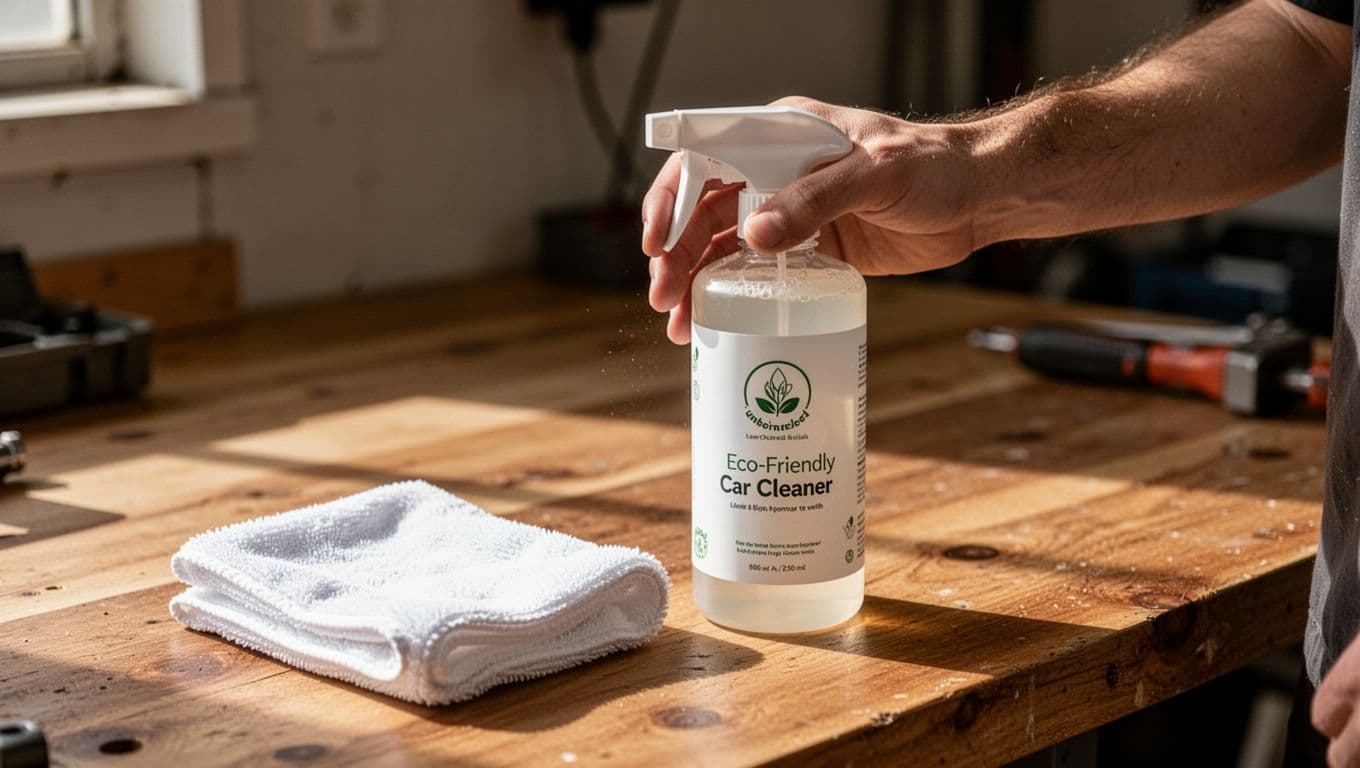
Photo by Tima Miroshnichenko
As noted in tests from Ethos Car Care on eco-friendly wash products, water consumption is a major factor in true sustainability. A quality waterless formula or a rinse-less concentrate cuts your water usage from fifty gallons down to just a few.
To pick the right option for your car, keep these factors in mind:
- Lubricancy: Look for slick formulas that lift dirt away from the paint rather than dragging it across the surface.
- Residue control: Choose low-foam or rinse-less options that don’t leave a chalky film on dark paint or glass.
- Material safety: Verify that the cleaner is safe for matte paint, vinyl wraps, and ceramic coatings if your car has them.
Safety Rules for Interior and Exterior Detailing
Switching to greener exterior products is a great step, but interior detailing requires careful attention too. Many people grab household glass cleaners or all-purpose sprays to wipe down dashboards and leather seats. Those products often contain ammonia or alcohol that cracks vinyl and destroys anti-glare coatings on modern navigation screens.
Always use dedicated automotive interior cleaners that match the specific pH of leather and plastic. Household cleaners can leave toxic residues inside a sealed cabin where you breathe the air.
You also need to think about where your wash water goes. Even when using a biodegradable eco friendly car cleaner, letting soapy water run straight into a storm drain damages local streams. Wash your car on a lawn or gravel surface so the soil can filter the water naturally. Alternatively, take your supplies to a commercial wash bay equipped with an oil-water separator.
Conclusion
Transitioning to an eco friendly car cleaner keeps your vehicle looking pristine while reducing your environmental footprint. You get professional results without exposing yourself to harsh fumes or damaging your car’s delicate surfaces.
Check your current stash of car care products today. Swap out the heavy chemical degreasers for plant-based alternatives and enjoy a cleaner, greener ride.