Dirty seats don’t need harsh scrubbing to look better. Most damage comes from too much water, the wrong cleaner, or a brush that is too stiff.
The safest way to clean car seats is to match the method to the material and work in small sections. That keeps fabric from soaking through, leather from drying out, and vinyl from turning dull.
Start with the safest setup, because the right prep does most of the work.
Key Takeaways
- Always spot test first on a hidden area before you clean the full seat.
- Use as little liquid as possible. Damp is good, soaked is not.
- Match the method to the material. Cloth, leather, and vinyl need different care.
- Dry seats fully to avoid mildew, odor, and water marks.
- Call a professional when stains are deep, odors linger, or the material is delicate.
Start With the Safest Cleaning Setup
Vacuuming is the first real step, not a warm-up. Crumbs, sand, and pet hair can scratch the surface or push dirt deeper when you start wiping.
Use a soft brush to loosen dirt from cloth and stitched seams, then follow with a microfiber cloth. Keep a second dry towel close, because dry blotting gives you more control than repeated spraying.

Always spot test a cleaner on a hidden area first. Apply a little product, wait for it to dry, and check for fading, residue, or stiffness. Older upholstery, aftermarket seat covers, and dyed leather need extra caution.
Spray cleaner onto the cloth instead of the seat whenever possible. That keeps liquid out of seams, foam, and switches. It also gives you better control on older interior materials.
If the seat feels wet to the touch, it already has too much liquid.
Gentle passes beat heavy pressure every time.
How to Clean Cloth Car Seats Without Soaking Them
Cloth seats hold dirt well, but they also show water marks fast. The goal is to lift the stain, not push it deeper into the padding.
A soft brush is best when the fabric has texture or visible seams. A microfiber cloth is better for blotting and final wipe-downs.
- Vacuum the seat surface and seams.
- Apply an upholstery-safe cleaner lightly. If the label allows it, spray the cloth or mist the stain, not the whole seat.
- Work the area with a soft brush in short, even strokes.
- Blot with a clean dry microfiber towel.
- Repeat only if needed, then let the seat air-dry fully.
If a mark is still visible, wait until the area is dry before making a second pass. A patient repeat is safer than one heavy soak. That is the cleanest way to clean car seats made from cloth without leaving rings or odor.
For larger cloth areas, clean one section at a time. That keeps the seat looking even instead of patchy. It also helps you stop before the foam gets too wet.
Leather and Vinyl Need a Gentler Touch
Leather and vinyl can look similar at a glance, but they do not react the same way. Leather can dry out and crack. Vinyl can hold residue and feel sticky.
Leather seats
Leather needs a cleaner made for automotive interiors, not a strong household spray. Put a small amount on a microfiber cloth, wipe gently, then dry the surface with a second cloth.
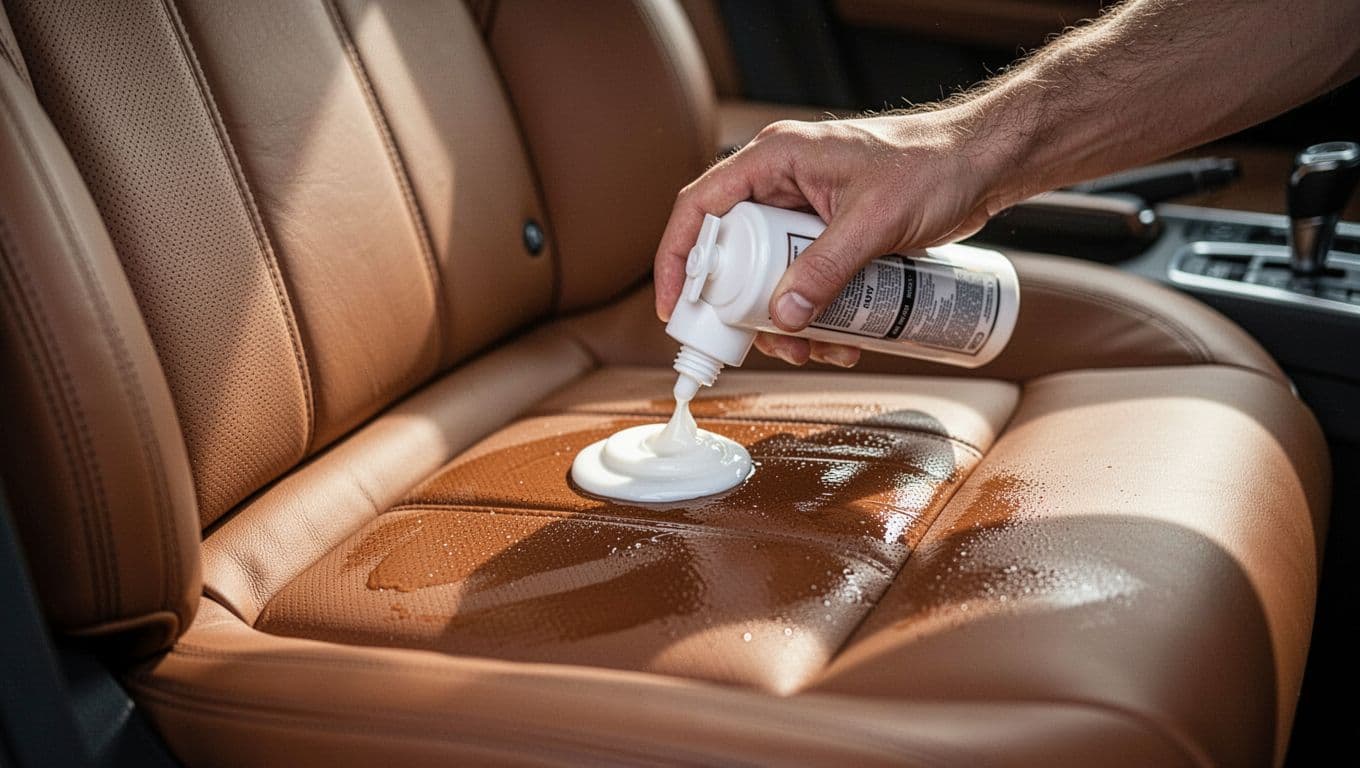
If the seat feels dry or slightly stiff after cleaning, use a leather conditioner made for car interiors. That helps protect the finish and keeps the surface supple.
Avoid heavy water, rough pads, and strong all-purpose cleaners. On perforated leather, use very little liquid and never flood the holes. If the trim is unclear, use the gentlest product first and test a hidden spot.
Vinyl seats
Vinyl is more forgiving, but it still needs a light touch. Mild soap and water, or a vinyl-safe interior cleaner, is usually enough for everyday dirt.
Wipe the seat clean, then dry it well so no film stays behind. Skip oily dressings unless you want a slippery surface that attracts dust. Vinyl should look clean and feel smooth, not shiny and coated.
If the seat gets a lot of sun, regular cleaning matters even more. Heat can make residue stand out and can speed up fading on older material.
Remove Common Stains Without Spreading Them
Some stains need a different first move. Rubbing food, mud, or grease the wrong way can spread the mess and make the seat harder to recover.
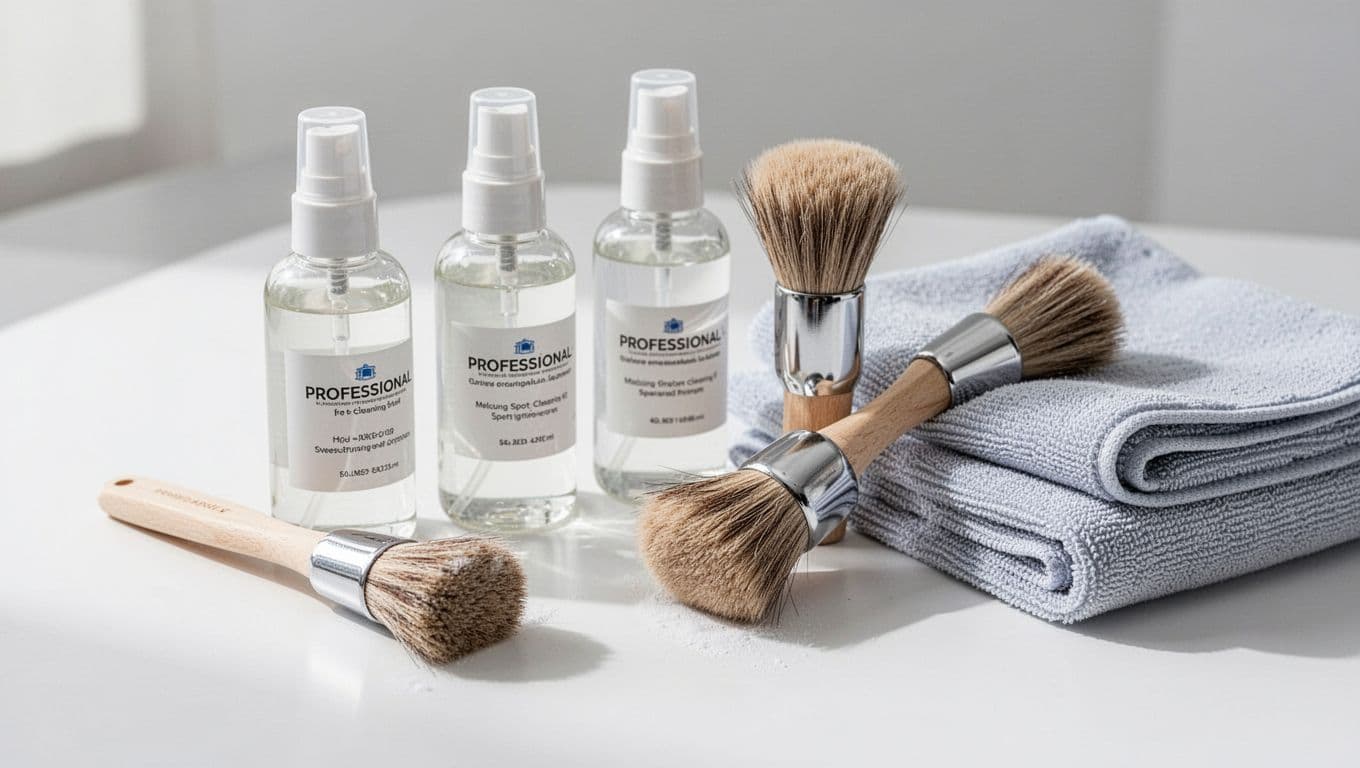
A quick first move matters more than scrubbing hard.
| Stain type | Best first move | What to avoid |
|---|---|---|
| Food and drink | Blot with a dry microfiber towel, then use a small amount of upholstery-safe cleaner | Rubbing hard, which spreads color and moisture |
| Mud | Let it dry, vacuum the loose dirt, then clean what is left | Wiping wet mud across the seat |
| Grease | Use a seat-safe cleaner made for interiors, then blot dry | Heavy soaking or household degreasers on leather |
| Pet messes | Remove solids first, then use an enzyme cleaner made for automotive fabric | Covering the smell with fragrance alone |
Pet messes often need extra attention. If odor stays behind after cleaning, an enzyme cleaner made for auto upholstery can help on cloth seats. On leather, keep liquids low and wipe fast with a leather-safe product.
For grease, less is more. A small amount of the right cleaner works better than a lot of product. If the stain still shows after one careful attempt, let the seat dry before trying again.
Let the Seats Dry Fully Before You Drive
Drying is part of the cleaning job. If moisture stays in the seat, mildew and odor can follow.
Open the doors or windows and let air move through the cabin. A fan helps. A dry microfiber towel can press extra moisture out of cloth seats without flooding them again.
A seat that looks clean but feels damp is not finished.
Avoid blasting heat at leather, and do not close the car up while the seat is still cool and wet. Seams, bolsters, and the lower cushion need to be dry before you put the car back into use.
If you used any liquid near switches, seat tracks, or perforated surfaces, give the area more time. A little patience now protects the finish later.
When Professional Detailing Is the Better Move
Some jobs are better left to a pro. Stains that have settled into the foam, repeated pet odors, dye transfer from clothing, and cracking leather can all get worse with more home cleaning.
Professional detailing is useful when you need extraction, material-safe products, and controlled drying. It is also the safer choice when the seat has stitching, perforations, or electrical components that should stay dry.
If a stain keeps coming back after two careful passes, stop there. More scrubbing can create a larger ring or pull color from the seat. A skilled interior detail can save the material and give you a cleaner result.
Conclusion
Cleaning car seats without damage comes down to three rules. Use the right cleaner, use very little liquid, and dry the seat fully.
Treat cloth, leather, and vinyl as different surfaces, because they are. The safer method is usually the slower one, and it leaves the interior looking fresh without early wear.
When the stain is deep or the material is sensitive, professional detailing is the smarter finish. That is how you keep the cabin clean without paying for it later.