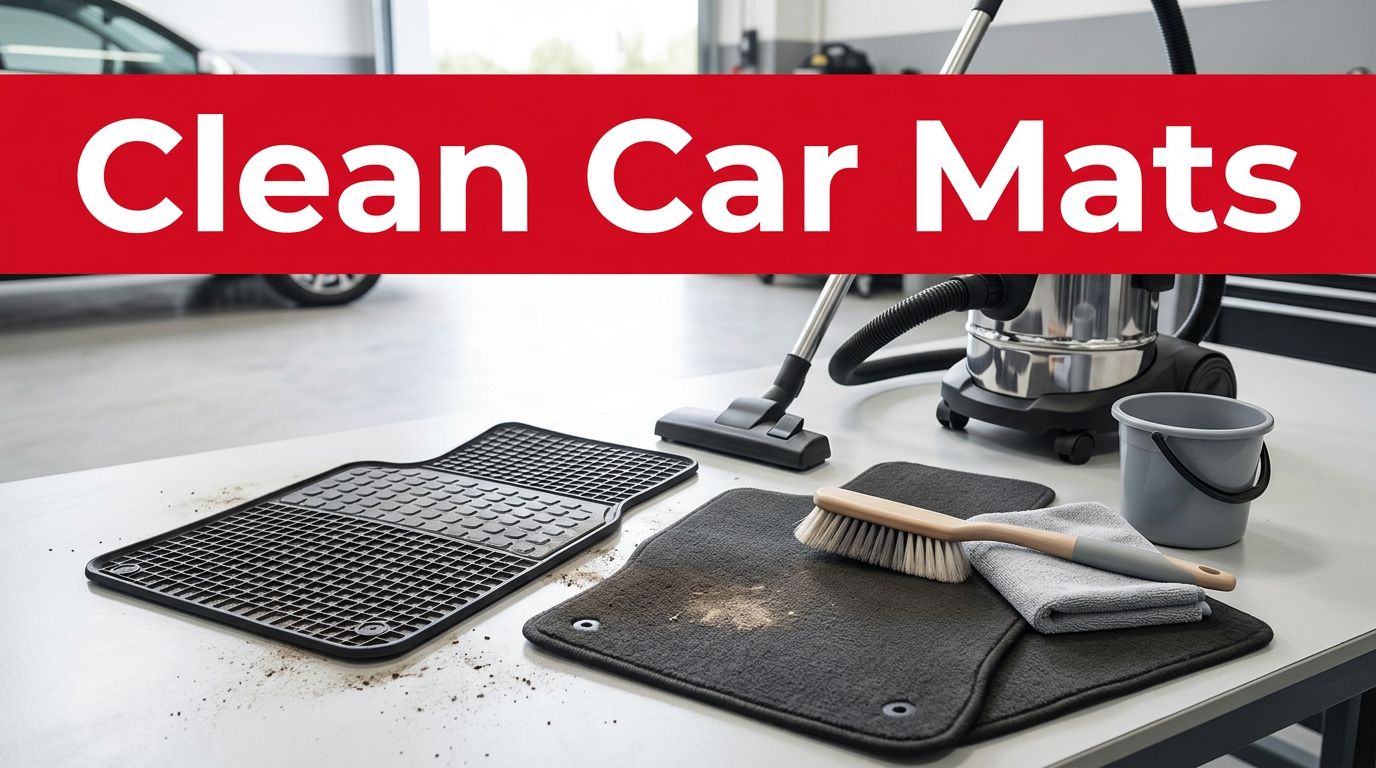
Dirty car mats hold sand, mud, food crumbs, salt, and unpleasant odors long after the rest of the interior looks clean. Clean car mats make the cabin feel fresher, protect the vehicle’s flooring, and help prevent dirt from spreading to the pedals and seats.
The right method depends on the material. Rubber and all-weather mats can handle water and scrubbing, while carpet mats need controlled moisture and careful drying. Follow the steps below for a clean finish without stains, smells, or damaged backing.
Key Takeaways
- Remove mats from the vehicle before washing or treating them.
- Use water and a soft brush for rubber and all-weather mats.
- Vacuum carpet mats first, then use limited moisture and gentle blotting.
- Treat salt, mud, pet hair, odors, and stains according to the mat material.
- Dry every mat completely before putting it back in the car.
Identify the Mat Material Before Cleaning
Start by removing every mat from the vehicle. Don’t clean them while they’re still inside. Water, soap, and loosened dirt can collect underneath, while wet mats can create slippery surfaces near the pedals.
Most car mats fall into three categories:
| Mat type | Suitable cleaning method | Main caution |
|---|---|---|
| Rubber mats | Rinse, mild soap, and soft brushing | Avoid harsh solvents and prolonged heat |
| All-weather mats | Rinse and scrub, including deep grooves | Don’t use excessive pressure on clips or edges |
| Carpet mats | Vacuum, spot-clean, and lightly rinse if permitted | Avoid soaking the backing |
Rubber and all-weather mats usually have raised channels that catch water, sand, and road debris. Carpet mats may have a rubber or textured backing that can separate, curl, or hold moisture if saturated.
Check the vehicle handbook or the label on the mat before using a cleaning product. A small hidden test area is also useful, especially on colored carpet, stitched mats, or mats with printed logos.
Keep a separate set of tools for the job. You’ll need a vacuum, a hose or bucket, microfiber towels, a soft-bristled brush, mild dish soap or a fabric-safe interior cleaner, and an old toothbrush for narrow grooves. Never mix cleaning products, particularly bleach with vinegar or ammonia-based products.
How to Clean Rubber and All-Weather Car Mats
Rubber mats are usually the easiest to wash, but the grooves can hold more dirt than they first appear to show. Work outside or in a washable area where dirty water can drain safely.
- Shake and vacuum the mats. Knock loose sand and grit from each mat. Vacuum the surface, corners, and grooves before adding water. This reduces muddy buildup during washing.
- Rinse away loose dirt. Use a hose with moderate water pressure. Start at the highest edge and rinse toward the lower edge. A strong jet can push debris deeper into textured areas or damage small retaining clips.
- Apply a mild cleaner. Mix a small amount of mild dish soap with warm water, or use a cleaner labeled safe for rubber and automotive interiors. Spray the solution onto the mat rather than flooding it.
- Scrub the surface. Use a soft or medium nylon brush in overlapping passes. Spend extra time on heel marks, corners, and raised channels. An old toothbrush can reach around fastening holes and molded edges.
- Rinse completely. Soap residue attracts dust and can leave the mat slippery. Rinse until the water runs clear and no foam remains.
- Dry both sides. Shake off excess water and wipe the top and underside with a microfiber towel. Place the mat flat or hang it in a shaded, well-ventilated area.

Avoid petroleum-based dressings, silicone-heavy shine products, bleach, and abrasive powders. They can leave rubber slick, weaken the surface, or create glare that makes the mat harder to inspect. A clean rubber mat should look refreshed, not oily.
All-weather mats can receive the same treatment. Pay attention to the deep channels, because trapped water and sand can spill onto the vehicle carpet after installation.
How to Clean Carpet Car Mats Safely
Carpet mats need a slower approach. Their fibers can be cleaned effectively, but excess water may soak into the backing and create a lingering odor.
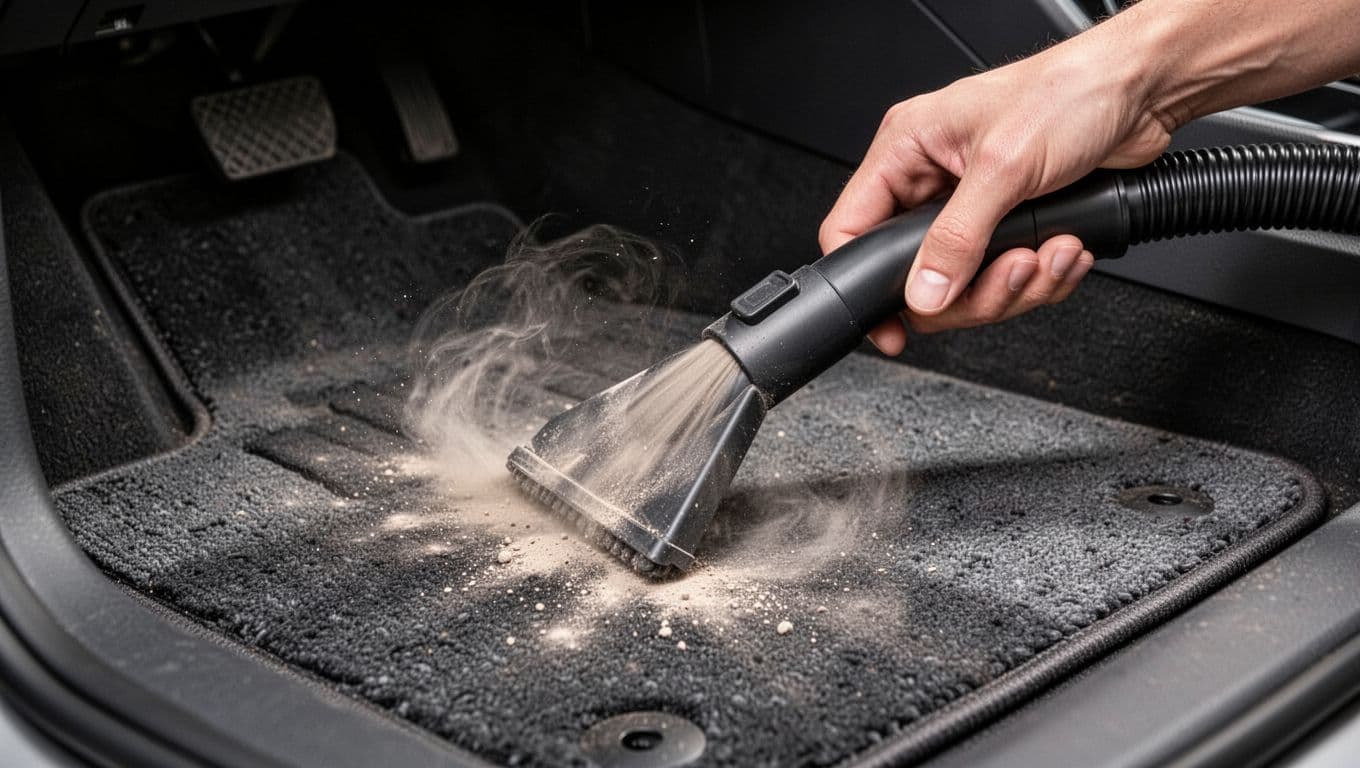
Begin with a thorough vacuum. Vacuum the top, edges, and underside, then use a crevice tool around the binding. If the mat has removable clips, take them out only if the manufacturer allows it. A vacuum with a brush attachment can lift fine dust without pulling aggressively at the fibers.
For general cleaning, mix a little carpet-safe automotive cleaner with water according to the product label. Apply it to a microfiber cloth or soft brush instead of soaking the mat. Work in small sections, brushing gently in different directions to lift dirt from the pile.
Blot each section with a clean, dry towel. Blotting removes moisture and dirt from the fibers. Rubbing hard can spread a stain, flatten the carpet, or pull the threads.
If the mat label permits washing, use a light rinse rather than a full bucket soak. Keep water away from the rubber backing when possible. Do not place a vehicle mat in a washing machine unless the manufacturer clearly approves it.
A wet-and-dry vacuum can remove moisture after cleaning, but don’t rely on it alone. Press dry towels across the mat and change them when they become damp. Then place the mat flat in a shaded, ventilated area until both sides are fully dry.
Never reinstall a damp carpet mat. Moisture trapped underneath can create odors and may affect the vehicle’s floor covering.
Steam cleaning can work on some carpet mats, but heat and moisture must be controlled. Avoid steam on mats with delicate backing, loose edges, glued sections, or heat-sensitive designs. When in doubt, use low-moisture spot cleaning instead.
Remove Mud, Salt, Pet Hair, and Odors
Different messes need different treatment. Using one strong chemical for every problem can damage the mat and leave more residue behind.
Mud: Let thick mud dry before cleaning carpet mats. Dried mud is easier to loosen with a brush and vacuum. Adding water too soon turns it into a paste that spreads through the fibers. Rubber mats can be rinsed immediately, followed by brushing inside the grooves.
Salt stains: Road salt and mineral marks often leave pale rings on dark mats. On carpet, lightly mist a mixture of equal parts white vinegar and water onto a cloth, then blot the affected area. Follow with a cloth dampened with plain water to remove residue. Test first on a hidden section, and don’t use this method as a general wash. For rubber mats, mild soap and water are normally enough.
Pet hair: Start with a vacuum, then use a slightly damp rubber glove or a rubber pet-hair brush to gather hair into small rolls. On carpet, move in short strokes rather than scrubbing back and forth. A lint roller can collect the remaining hair. Rubber mats usually release hair after rinsing and brushing.
Odors: Remove the source before treating the smell. Food, moisture, and pet residue can keep producing odors beneath the surface. For carpet mats, sprinkle a light layer of baking soda over the dry fibers, leave it for at least 30 minutes, and vacuum thoroughly. An enzyme cleaner labeled for automotive carpet can help with pet accidents, but follow the label and test the color first.
Stubborn stains: Treat fresh stains quickly. Blot liquids with paper towels or a clean microfiber cloth, then use a small amount of fabric-safe cleaner. Greasy marks may respond to diluted dish soap, while ink, paint, and tar often need a product designed for that stain. Avoid acetone, paint thinner, and household degreasers. They can discolor carpet and soften rubber backing.
Don’t cover an odor with a heavy fragrance. A clean, dry mat is a better result than a strong scent mixed with leftover dirt.
Dry, Reinstall, and Maintain the Mats
Drying is part of cleaning, not an optional final step. Stand rubber mats on their edge for a short period, then lay them flat so water doesn’t remain in the grooves. Carpet mats should be dried on both sides in moving air.
Dubai’s heat can speed up drying, but strong direct sunlight can make some rubber mats curl or become brittle over time. Shade, airflow, and a clean drying surface are safer choices. Keep mats away from dusty ground after washing, or place them on a clean rack or towel.
Before reinstalling, inspect each mat. Check that clips, holes, and edges are intact. The driver’s mat must sit in its original position and remain securely attached. It should never overlap another mat or touch the accelerator, brake, or clutch pedal.
Vacuum carpet mats weekly if the vehicle carries sand, children, or pets. Shake out rubber mats regularly, especially after beach trips, rain, or dusty drives. A full wash every few weeks keeps grime from building inside the grooves.
If stains remain after two careful treatments, or if the mat has a persistent odor, professional interior detailing is a practical option. A trained team can use controlled extraction and material-safe products without leaving the vehicle’s flooring soaked.
Conclusion
Learning how to clean car mats properly starts with identifying the material. Rubber and all-weather mats need rinsing, mild soap, and careful brushing, while carpet mats need vacuuming, limited moisture, and patient blotting.
Mud, salt, pet hair, odors, and stubborn stains are easier to remove when treated with the right method. Finish by drying every mat completely and checking the driver’s mat before fitting it back in place. Clean, dry mats protect the interior and keep every drive more comfortable.