You look at a freshly waxed vehicle and notice an undeniable wet-look reflection staring back at you. Achieving that deep car wax shine is the ultimate reward for a Saturday morning spent detailing in the driveway.
Many car owners wonder if a simple layer of paste or liquid can genuinely transform dull, tired paint. Understanding how protective coatings interact with your clear coat helps you set realistic expectations for your next detailing session.
Key Takeaways
- Wax creates a smooth, glossy surface by filling in microscopic imperfections in the clear coat.
- Protective layers enhance existing paint clarity rather than repairing deep scratches or oxidation.
- Natural carnauba formulas deliver warm depth, while synthetic sealants offer long-lasting durability.
- Proper surface preparation, including washing and clay bar treatment, is essential for maximum reflection.
What Wax Actually Does to Your Paint
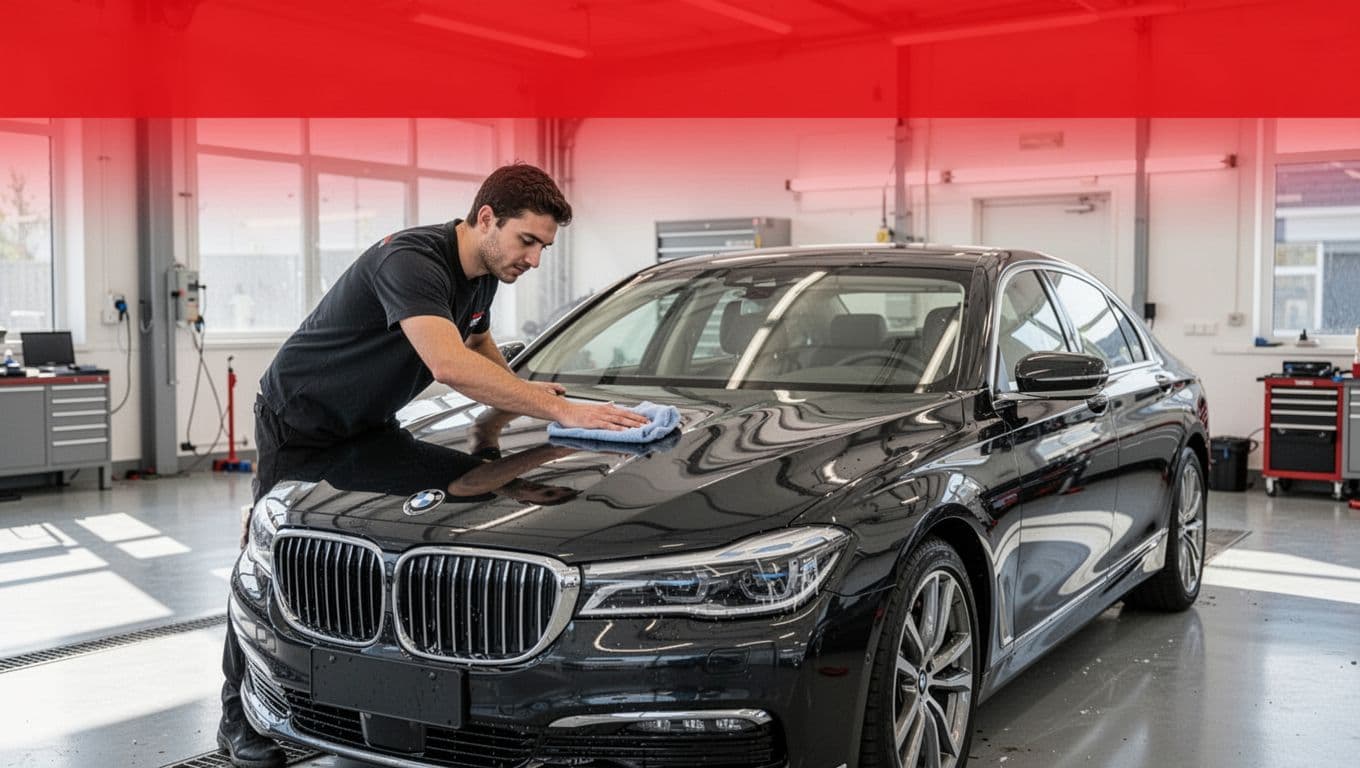
Photo by Dextar Studio ™
Your car paint has microscopic valleys and ridges that scatter light in every direction. When light bounces unevenly off a rough surface, the finish looks hazy and dull. Applying a quality car wax fills in these tiny gaps to create a flat, uniform optical plane.
Light rays bounce straight back to your eyes instead of scattering randomly across the panel. This smooth barrier is the secret behind the mirror-like reflections you see after a thorough detailing job.
Wax acts as a sacrificial shield against environmental contaminants like tree sap, bird droppings, and UV rays. It doesn’t permanently alter the factory clear coat, but it provides a temporary layer that repels water and traps contaminants on top of the finish. You get enhanced gloss alongside reliable daily protection against the elements.
Understanding the Limits of Gloss Enhancement
Many DIY detailers expect a tub of paste to erase years of neglect and heavy wear. Wax enhances and protects your existing paint condition, but it doesn’t permanently remove oxidation, deep scratches, or swirl marks.
If your clear coat is heavily damaged or chalky, a coat of wax will only seal that dull appearance underneath a shiny shell. True paint correction requires a multi-step process involving cutting compounds and polishing pads to level the clear coat before any protective layer goes on.
Think of wax as the topcoat on a freshly painted canvas. It makes the colors pop and adds incredible depth, but the underlying surface must be corrected first if you want flawless results. Skipping the paint correction step means you are simply shining up a flawed surface.
Comparing Natural Carnauba and Synthetic Sealants
Choosing the right product dictates how long your finish stays glossy and how deep the reflection looks. Natural carnauba paste delivers an unmatched warm glow that enthusiasts love for show cars.
Synthetic sealants use man-made polymers to bond tightly with the paint surface, offering superior durability against frequent washing and high temperatures.
| Product Type | Primary Benefit | Typical Durability | Best Suited For |
|---|---|---|---|
| Carnauba Wax | Deep, warm gloss | 4 to 8 weeks | Show cars and weekend drivers |
| Synthetic Sealant | Long-lasting protection | 3 to 6 months | Daily drivers and harsh climates |
| Ceramic Coating | Extreme gloss and hardness | 2 to 5 years | Maximum long-term investment |
Balancing longevity and appearance helps you pick the right option for your garage routine. Carnauba requires frequent reapplication, while synthetic sealants keep your vehicle protected through changing seasons without constant maintenance.
Preparing the Surface for Maximum Reflection
The secret to a brilliant car wax shine starts long before you open the product container. Dirt and embedded bonded contaminants act like sandpaper under an applicator pad, creating new swirls while you work.
Start with a thorough contact wash using a pH-balanced soap to lift loose grit from the panels. Follow up with a clay bar treatment to pull stubborn industrial fallout, rail dust, and embedded grime out of the clear coat.
A completely clean surface allows the protective formula to bond securely with the paint. Skipping this prep phase leads to poor bonding, reduced durability, and a cloudy finish that fails to impress. Taking your time during the wash stage guarantees your final buffing cloth reveals a pristine, flawless reflection.
Final Thoughts
Applying a protective coating remains one of the most satisfying ways to upgrade your vehicle appearance in an afternoon. When you pair proper surface prep with the right product, you secure lasting gloss and reliable defense against road grime. Grab your microfiber towels and enjoy the satisfying transformation of a freshly detailed car.