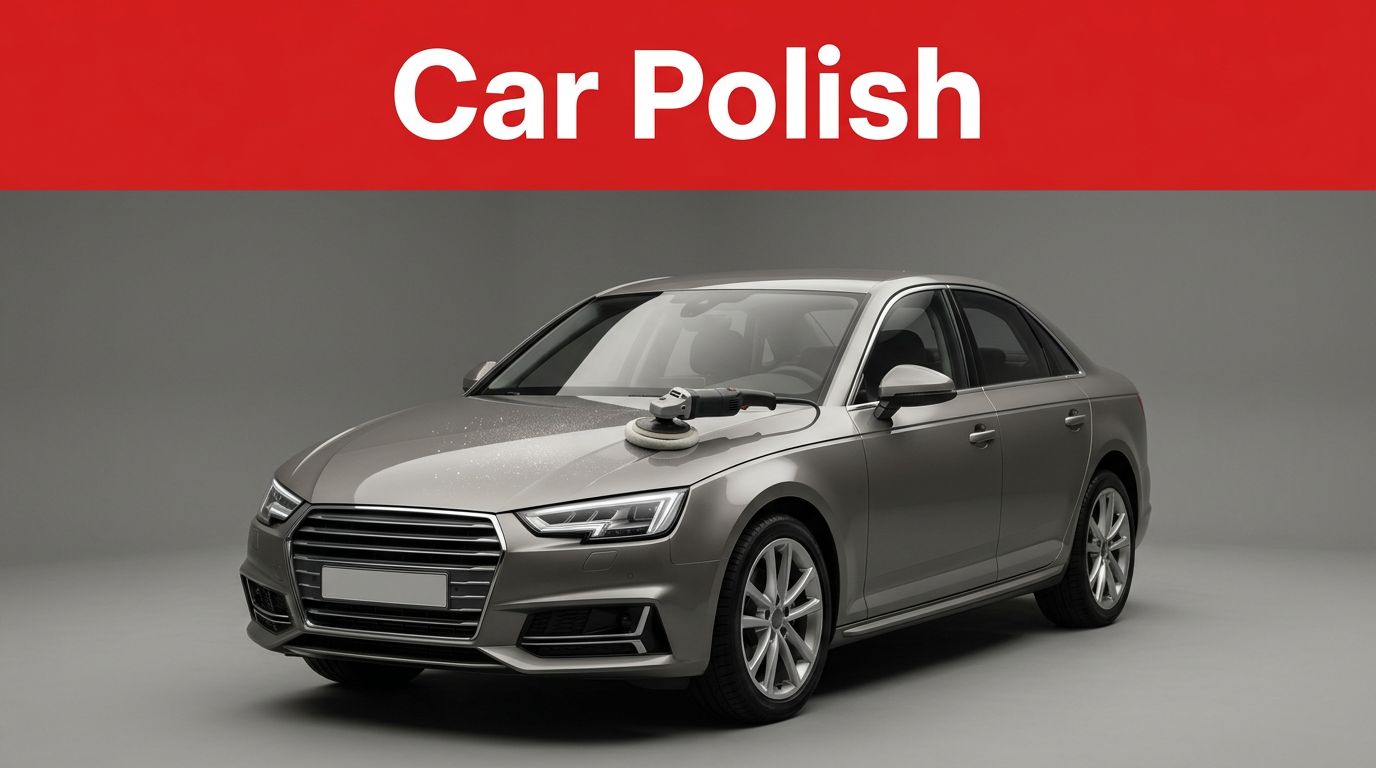
Car polishing is often confused with waxing, but it does a different job. Polish does not just add shine. It refines the clear coat and reduces minor surface defects that make paint look dull or tired.
If your car has swirl marks, light scratches, oxidation, or a loss of gloss, polish may be the right step. If the damage is deeper, a stronger correction or a professional inspection is the safer choice. Knowing the difference saves time, money, and the finish on your car.
Key Takeaways
- Polish works on the paint surface, it removes or refines minor defects rather than just making the car glossy.
- Swirl marks, dull paint, light scratches, and oxidation are common signs that polishing may help.
- Wax adds protection and shine, while polish corrects the finish.
- Compound is stronger than polish, and ceramic protection is about longer-lasting defense, not paint correction.
- Over-polishing can remove clear coat, so severe damage needs careful assessment.
What Car Polish Actually Does
Polish works on the top layer of the paint, usually the clear coat. It uses fine abrasives to level small imperfections so light reflects more evenly across the surface. That is why a polished car looks cleaner, brighter, and sharper.
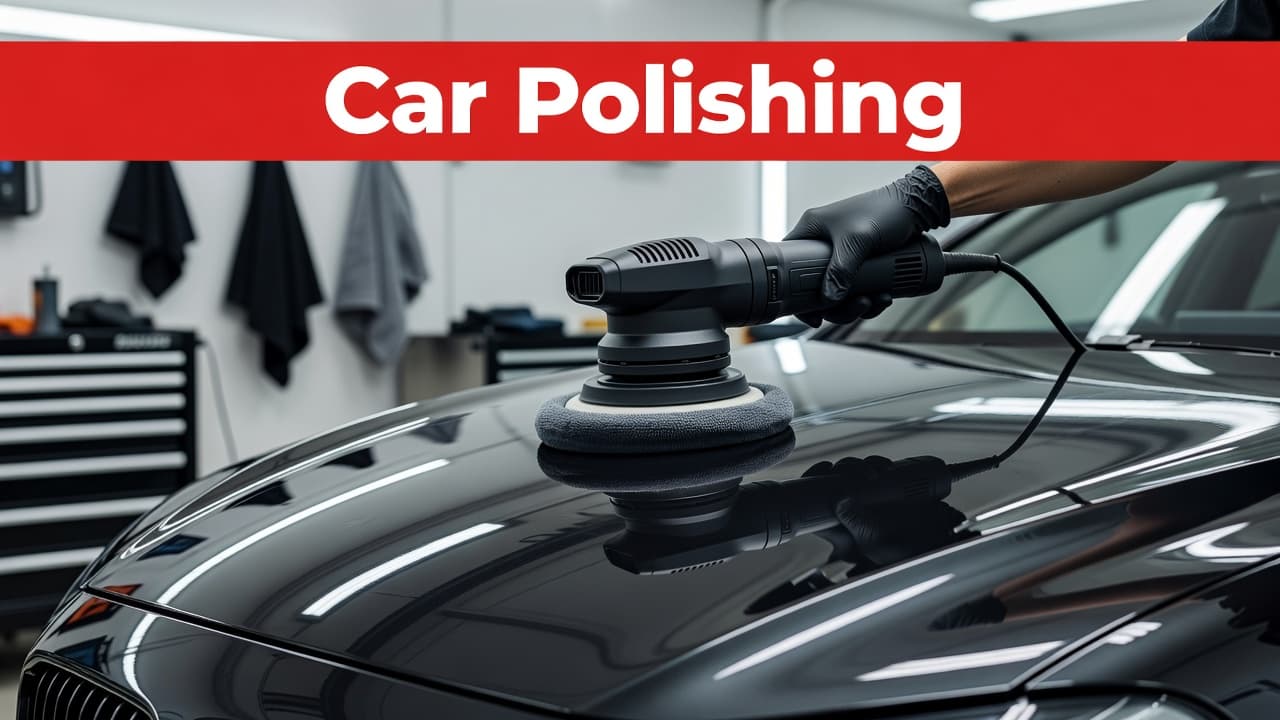
Think of it like smoothing a clear window. The glass looks the same from a distance, but the view becomes much clearer once the haze is gone.
A proper polish can reduce the look of swirl marks, fine scratches, and oxidation. It can also bring back lost gloss after months of washing, sun exposure, and road grime. What it does not do is hide serious damage. It does not replace paint, and it does not fix scratches that go beyond the clear coat.
Polish is a correction step, not a finish product. After polishing, many cars need wax, sealant, or ceramic protection to help preserve the result.
If the scratch is deeper than the clear coat, polish won’t erase it.
Signs Your Car Needs Polishing
A car does not always need polishing on a set schedule. It needs polishing when the paint starts to lose clarity. That usually shows up in a few very clear ways.
- Swirl marks show up as fine circular lines, especially in sunlight or under bright shop lights.
- Light scratches are visible, but they do not feel deep enough to catch a fingernail.
- Oxidation makes the paint look chalky, faded, or dry.
- Dullness appears when the finish looks flat even after a proper wash.
- Loss of gloss makes dark colors look grayish and bright colors look muted.
A quick wash can reveal these issues better than a dirty car can. Once the surface is clean and dry, the defects are easier to see. If the paint looks better in shade than in direct sun, polishing may help restore that missing depth.
The key detail is this, polish helps with minor surface problems. If the paint is peeling, the clear coat is cloudy in large patches, or the scratch is deep enough to feel with a fingernail, polishing is not the answer on its own.
Polish vs Wax vs Compound vs Ceramic Protection
These products are often grouped together, but they do different jobs. A simple side-by-side view makes the difference easier to understand.
| Product | Main Job | Best For |
|---|---|---|
| Polish | Refines the paint and reduces minor defects | Swirl marks, light scratches, dullness |
| Wax | Adds shine and short-term protection | Freshly polished paint, regular upkeep |
| Compound | Cuts more aggressively to remove heavier defects | Deeper oxidation, stronger marks, rougher paint |
| Ceramic protection | Creates a durable protective layer | Long-lasting protection after paint correction |
Polish sits in the middle. It is stronger than wax, but milder than compound. That makes it a common choice for everyday cars that have small marks and faded gloss, but not major damage.
Compound is the more aggressive option. It removes more material, which helps with heavier defects, but it also needs more care. A compound may be followed by a polish to refine the finish again.
Wax is the easiest to understand. It does not correct the paint. It protects the finish and adds a warm shine, but it will not remove swirl marks or scratches.
Ceramic protection is different from all of them. It is a protective layer, not a correction step. If the paint has defects underneath, ceramic protection will seal them in place, not fix them.
Wax protects. Polish corrects. Compound cuts harder. Ceramic protection lasts longer.
When Polishing Is the Right Move
Polishing makes sense when the paint still has good structure, but the surface has lost clarity. That often happens after repeated automatic washes, long periods in strong sun, or months of normal daily driving.
It is also a smart step before applying wax or ceramic protection. Those products work best on clean, corrected paint. If the finish is already dull or marked, protection alone will not give you the clean look you want.
A few common times to consider polishing are:
- after the car has visible swirl marks from washing,
- when darker paint looks cloudy instead of reflective,
- before selling a vehicle and wanting a cleaner presentation,
- after oxidation starts to dull the finish,
- when the car has light scratches but no major paint damage.
Most everyday cars do not need constant polishing. They need it when the paint starts to look tired. That is a simple rule, and it works. If the car still looks sharp after a wash, you may only need wax or protection. If the clarity is gone, polishing is the better step.
When to Stop and Call a Professional
Some paint issues are too serious for a basic polish. Deep scratches, peeling clear coat, heavy oxidation, and uneven repaint work need a more careful look. If you are unsure how much clear coat is left, that is the point to slow down.
Too much polishing can remove clear coat. That layer is thin, and once it is gone, it does not grow back. More machine time is not always better. Sometimes it only means more risk.
A professional detailer can inspect the paint under strong light, choose the right pad and polish, and decide whether the finish can be corrected safely. Severe defects may require professional correction, not a stronger bottle from the shelf.
If the car has matte paint, fresh bodywork, or areas that already look worn through, skip the guesswork. Those finishes need the right process, not an aggressive one.
Conclusion
Car polish is a corrective step, not a shine shortcut. It removes or refines minor surface defects, then gives the paint a clearer, healthier look.
When your car shows swirl marks, dullness, oxidation, or light scratches, polishing may be the right move. When the damage is deeper, wax, compound, or ceramic protection may be the wrong answer for the job.
The safest approach is simple. Look at the paint, read the defects, and choose the service that fits the finish. That is how you keep the car looking clean without wearing the clear coat down too far.